
Mon - Fri: 8:30am - 5:30pm, closed Wednesday

21902 W. Devonshire St, CA 91311


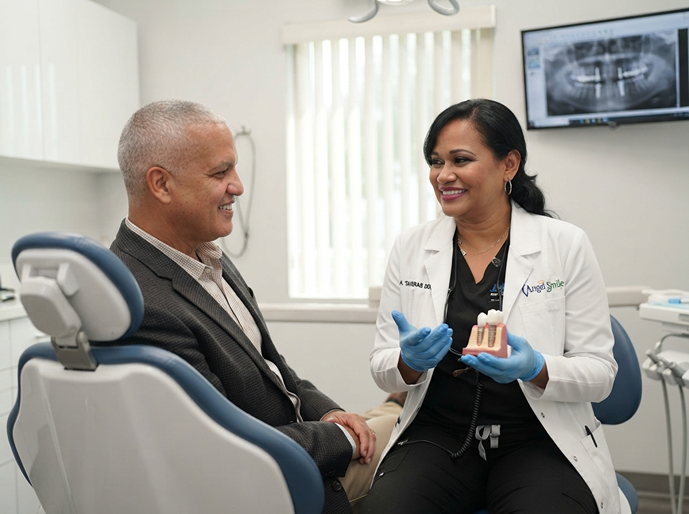
You noticed something a few weeks ago. Maybe it was a slight wiggle when you bit down on something. Or it could be a weird clicking sound. Or maybe your bridge just fell out at lunch, and that was not ideal.
A loose dental bridge is one of those things that feels embarrassing to talk about, but it constantly happens. Busy Northridge professionals juggling work, kids, and everything in between often find that dealing with a loose dental bridge repeatedly is the last thing they want to do.
If your bridge is giving you trouble, it is probably trying to tell you something. And the answer might not be another bridge.
Bridges have been around for a long time, and they have helped a lot of people. But they come with a real expiration date that most patients do not fully understand when they first get one.
On average, the lifespan of a dental bridge is five to fifteen years. Some can last even longer with proper care, but they do not last forever. That sounds reasonable, right? The issue is that when a bridge fails, it does not just affect the fake tooth in the middle. It affects the healthy teeth on either side that were ground down to hold it in place.
That is not a minor issue. You started with one missing tooth. Now, potentially, you are managing three.
And while bridges can work fine for a while, a loose one is not something to sit on. When cement fails or an abutment tooth cracks, those filed-down anchor teeth get exposed to bacteria, temperature changes, and pressure they were never meant to handle on their own.
Here is where it gets important, especially if you are a working professional with a full schedule.
A loose dental bridge creates gaps where bacteria can collect under the gumline. Those bacteria do not stay put. It can lead to decay in your abutment teeth, gum disease, and even bone loss in your jaw. What started as a cosmetic inconvenience can quietly turn into a serious health issue.
There is also the professional side of things. If you work in sales, management, healthcare, law, or any field where you are face-to-face with clients and colleagues, an unstable smile affects your confidence in ways you might not even realize. You start holding back your smile. You pick your words carefully to avoid certain mouth movements. It is a small thing that takes up a lot of mental space.
And let us be honest, replacing a bridge with another bridge is just delaying the same conversation. Most traditional bridges last ten to fifteen years at most. You will be back in this chair again.
This is where it is useful to think long-term.
If you are a parent in Northridge making decisions about your dental health, you are probably thinking about more than just this year. You are thinking about not having to deal with these issues again in five years. You are thinking about what kind of example you are setting for your kids when it comes to health decisions. You are thinking about whether this investment makes sense over time.
That is exactly where dental implants come in.
Dental implants work differently from bridges. Instead of sitting on top of your gums or being anchored to neighboring teeth, an implant goes directly into your jawbone. A titanium post acts as an artificial tooth root, and over a few months, your bone fuses to it in a process called osseointegration.
Once that happens, the implant is part of you. It is not going anywhere.
Here are the best dental implant benefits that matter most for professionals and parents:
In the presence of healthy tissues, a well-integrated implant with appropriate biomechanical loads can have five-year-plus survival rates from 93 to 98 percent. Compare that to a traditional bridge that may need replacing after ten to fifteen years, and the math starts to favor implants, especially over a lifetime.
With a bridge, the healthy teeth on either side have to be filed down to support the crown. That is permanent damage to perfectly good teeth. An implant stands alone. Your surrounding teeth stay untouched.
When a tooth is missing, your jawbone starts to shrink in that area because there is no root stimulating it. A bridge sits on top and does not address this issue at all. An implant mimics a natural tooth root, which keeps the bone stimulated and prevents the gradual loss of structure.
Most implant patients say they forget the implant is even there. You can eat what you want, speak naturally, and smile without thinking about it. That kind of confidence matters, especially in professional settings.
This surprises people. Bridges seem cheaper upfront, but when you factor in potential replacements every ten to fifteen years, plus the cost of treating complications in abutment teeth, implants often win the cost-benefit comparison over a lifetime. Think of a bridge like renting and an implant like buying.
One common reason people stick with bridges is that they think implants are complicated or painful. That concern is understandable.
The reality is that most patients say the procedure was far more manageable than they expected. There is a healing period, yes, but your day-to-day life is not dramatically disrupted. And with modern sedation options, the actual placement is generally comfortable.
Your dentist will take a full look at your bone density, gum health, and medical history before recommending the right approach for your situation. Not everyone is an immediate candidate, but most healthy adults qualify.
According to published clinical data, conventional titanium dental implants typically have success rates of 90 to 95 percent for ten-year follow-up periods. That kind of consistency is hard to match with any other tooth replacement option.
Meanwhile, the ten-year survival rate for resin-retained bridges sits at around 64.9 percent, meaning a significant portion of patients will need intervention within a decade.
For someone in their 30s, 40s, or 50s, those numbers tell a clear story.
Imagine a 42-year-old parent, a busy career, an active family, and a bridge that has been there since her late 20s. It starts to feel loose. She replaces it. Fifteen years later, same thing, but now one of the anchor teeth is compromised too.
Versus the same person who, at 42, decides to get an implant. Twenty years later, it is still working fine. No replacements. No complications from grinding down healthy teeth. One procedure, one outcome.
That is not a hypothetical. That is what long-term implant data actually shows.
A: Possibly. Many patients with mild to moderate bone loss are still candidates for a bone grafting procedure done beforehand. Your dentist will evaluate your condition during your consultation.
A: From placement to final crown, the typical timeline is three to six months. Most of that time is healing, not active treatment.
A: Coverage varies widely. Some plans cover part of the cost, and many dental offices offer financing. It is worth checking and comparing the long-term cost with the cost of repeated bridge replacements.
A: There is no upper age limit. Dental implants work well for adults of any age as long as bone density and overall health support the procedure. Seniors are actually a growing group of implant patients.
A loose bridge is not just an annoyance. It is a signal that the old solution is wearing out and that you have a chance to do something smarter this time.
The best dental implants' benefits go beyond just looking good. They protect your bone, leave your healthy teeth alone, and give you something that is built to last for decades, not just years. For professionals and parents in Northridge who want a real, reliable fix rather than a temporary patch, implants are worth a serious conversation.
You do not have to figure this out alone. The team at Angel Smile Dental Group is right here in your area and ready to walk you through your options with no pressure and no confusing dental jargon.
Call us at (818) 884-4422 or schedule your consultation online today. One conversation could save you years of repeat repairs.


