
Mon - Fri: 8:30am - 5:30pm, closed Wednesday

21902 W. Devonshire St, CA 91311


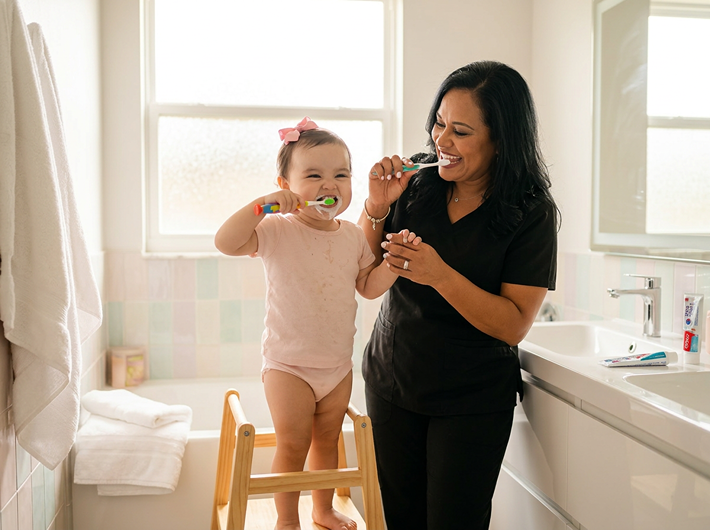
You’re already doing the basics. You bought the cute toothbrush with their favorite character. You tell them every night. You even let them pick the flavor of toothpaste. But your child still got a cavity at his last checkup, and you wonder what you’re missing.
It’s not just you. More than one in three parents said their child had tooth decay, cavities, or gum issues in the past two years, according to a 2024 national poll from the University of Michigan Health C.S. Mott Children’s Hospital. And here’s the kicker: most of those kids were brushing. The problem usually isn’t kids not brushing. But it’s the routine around brushing that’s incomplete.
Now to the good part. If you keep at it, a five-minute daily routine can make a real difference. And you don’t have to use any fancy gadgets or expensive products to do so!
Let’s talk about what is actually going on inside your child’s mouth, all day long.
So each time your child eats or drinks something that contains sugar or starch, the bacteria in his mouth feed on the sugar and produce acid. That acid then sits on tooth surfaces and begins to break down enamel. Brushing twice a day will get rid of a lot of that buildup, but not all of it. Bacteria that cause cavities and foul breath like to hide between teeth, along the gumline, and on the back of the tongue.
According to the CDC, cavities are the most common chronic disease of childhood in the United States. More than half of children aged 6 to 8 already have a cavity in a baby tooth. More than half of all teens between the ages of 12 and 19 have had one or more permanent teeth.
Those are large numbers. But they are largely preventable, too.
In a University of Michigan poll, 64% of parents say their child brushes twice a day, but fewer than 25% of kids floss regularly, and only about a third brush their tongue consistently. Those small holes add up over time.
So what does a complete routine look like? Here's an easy one that'll take about five minutes and hit all the bases.
The baseline is two minutes. Easy to say, but most kids and adults give up around the 45-second mark. Use a timer, a song, or a toothbrushing app to reach that mark. If you have kids under 6, you should be doing the brushing, or at least finishing up after they go. Kids usually don't have the fine motor skills to do a good job on their own until they are about 7 or 8 years old.
Use a toothbrush with soft bristles and fluoridated toothpaste. “A pea-sized amount is enough for children 3 to 6 years old. Here, fluoride is your best friend. The CDC confirms that children who brush daily with fluoride toothpaste have fewer cavities. It fortifies enamel and aids in reversing early stages of tooth decay before it turns into a real problem.
Angle the brush slightly toward the gum line and use small circular motions instead of scrubbing back and forth. Brush all surfaces of each tooth: outside, inside, and chewing surfaces.
This is the step most families skip, and it is the one that matters a lot. You cannot reach between the teeth with a toothbrush. That’s where cavities often begin.
You only need to floss once. “Once a day will do. Bedtime is the best time because you’re getting rid of everything that you built up through the day before your child goes to sleep.
Young kids find floss picks easier to use than regular floss. You can take them until they're 10 or 11, and they can handle it themselves. Make it part of the routine, not a separate task, and it becomes automatic pretty quickly.
This one is free, fast, and hardly anyone does it. After lunch, after a snack, after a juice box, a simple swish and spit with water helps to clear away sugar and acids before they can sit on tooth surfaces.
Only 15% of parents say their child regularly uses this strategy, according to a University of Michigan poll. What a lost opportunity. This is not a substitute for brushing. “You’re just adding a little more protection to your kid’s enamel throughout the day.”
Bacteria love to live on the tongue. If you don’t do this, you’re missing a major source of bad breath and oral bacteria. All it takes is a quick brush across the tongue with a toothbrush or a tongue scraper at the end of the brushing session.
For kids, once they get used to it, this is often the most fun part. Turn it into a game. Who can stick their tongue out furthest?
You don't need to ban all the sweet stuff. But it’s good to know what your child is eating and when. If you snack often, especially on sticky or sugary foods, you can keep acid production going all day. The American Academy of Pediatric Dentistry recommends limiting snacks with added sugar between meals and consuming water as the primary beverage throughout the day.
In fact, milk and cheese are good for teeth. They have calcium and casein to help rebuild enamel. Raw vegetables such as carrots and celery are natural tooth cleaners. These little trades add up over time.
The sooner you begin, the easier it will be. Here’s a quick rundown:
Ages 0-2: Clean gums with a soft, damp cloth. Begin brushing as soon as the first tooth appears. Schedule a dental visit for your child’s first birthday.
Ages 3 to 5: Brush with a pea-size amount of fluoride toothpaste. You should still be supervising and assisting. It is the age of the fastest habit formation.
Ages 6 to 9: Children can take more independent control of brushing but still need some help and supervision. Start flossing when two teeth touch.
Ages 10 and up: Kids can often do the entire routine on their own, but check in frequently. Schedules get busier, and routines can fall apart.
A lot of parents wait until their child has a problem before they bring them in. But a cavity that hurts is already serious. The American Academy of Pediatric Dentistry recommends checkups every 6 months after the first birthday.
Routine visits to a pediatric dentist in Chatsworth aren’t just about checking for cavities. The CDC says your child’s dentist can apply fluoride varnish that can prevent up to one-third of cavities in baby teeth. They can also place dental sealants on the back teeth that are most likely to get cavities, and that can prevent up to 80% of cavities in those molars.
Regular visits do more than protect; they provide comfort. Children who regularly visit the dentist from a young age are far less likely to suffer from dental anxiety. And that matters, because anxiety is one of the biggest reasons adults avoid dental care, and those habits begin early.
At Angel Smile Dental Group in Chatsworth, we see kids of all ages, and we make it a point to keep appointments calm, positive, and not really scary. We explain everything in terms that kids understand, and we go at their pace. Most kids leave happier than when they came in.”
Two things are changing with kids’ dental health right now. First, pediatric cavities have decreased in some areas, largely due to water fluoridation and increased access to dental education. Yet millions of children continue to suffer from tooth decay every year. A 2024 study published in Frontiers in Oral Health confirmed that family routines such as mealtime structure, sleep habits, and screen time all have an impact on oral health outcomes.
Secondly, more parents are inquiring about tooth problems related to diet. With the boom in juice pouches, gummy vitamins, and sticky snacks marketed to kids, cavities from diet are a continuing concern. The good news is that awareness is growing, and small changes at home go well with professional dental care to keep little smiles healthy.
The American Academy of Pediatric Dentistry recommends the first visit by age one or within six months of the first tooth appearing. Initial visits are important to identify any early problems and to help your child become familiar with the dental setting before fear has a chance to develop.
Yes, it does indeed. Baby teeth help with speech and chewing, and make space for permanent teeth. Cavities in baby teeth can lead to pain, infection, and premature tooth loss that disrupts the alignment of permanent teeth that are coming in. Protecting baby teeth protects permanent teeth, too.
For children younger than 3, apply just a smear of toothpaste, about the size of a grain of rice. Children age 3 and up: Use a pea-sized amount. More toothpaste does not mean it will clean better. Young children often swallow toothpaste. Use a small amount to reduce the amount of fluoride swallowed at an age when they do not know how to spit yet.
The best indicator is your child’s dental exam. Your dentist can see early signs of decay, enamel loss, or buildup that you can’t see at home. Look between visits for white spots on teeth (an early sign of demineralization), bleeding when flossing (a sign of gum inflammation), or bad breath that won't go away. Any of those are worth mentioning at your next visit.
Brushing is a good start. But it’s a five-minute daily routine of brushing, flossing, rinsing after meals, tongue cleaning, and mindful snacking that provides your child’s teeth with real protection. Combine that with routine trips to a pediatric dentist in Chatsworth, and you’re laying the groundwork for healthy teeth for a lifetime.
Small, consistent habits are far more important than the occasional heroic effort. And if you’re not sure what your child’s routine is, the easiest next step is to bring them in for a checkup and let us take a look together.
Ready to book your child’s next appointment? Call Angel Smile Dental Group or book online. We enjoy seeing new patients.


