
Mon - Fri: 8:30am - 5:30pm, closed Wednesday

21902 W. Devonshire St, CA 91311


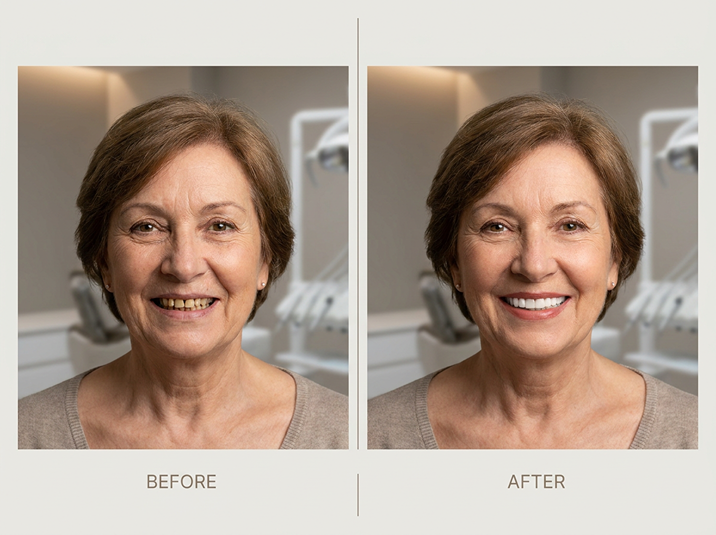
You don’t get the burger. You pass on corn on the cob at family cookouts. You laugh and then cover your mouth, and you wonder when you started doing that. If this sounds like you, you are not alone. More than 150 million Americans are missing teeth, and a good number of them are seniors who have become accustomed to working around the problem instead of fixing it. The American Academy of Implant Dentistry estimates that nearly 23 percent of the world’s senior citizens are toothless. That’s no small amount, and the effects are well beyond the mouth.
If you lose teeth, your face will change shape. They are painful and difficult to chew. They can interfere with how clear your speech is. In fact, they cause bone loss in the jaw over time, and the longer you wait, the more difficult and expensive it is to fix. What seems to be a cosmetic issue on the surface is a structural health issue underneath.
One of the most transformative options available today is dental implants in Chatsworth, which provide a stable, natural-looking foundation for full mouth restoration. As more local seniors discover the benefits of advanced restorative treatments, they are regaining their confidence, improving daily comfort, and enjoying a renewed sense of independence.
A lot of people think that "someday" they'll get dentures. Some have them already and are frustrated by the slipping, the adhesive, and the restricted diet. Others endure the gaps and discomfort in silence, telling themselves it is not worth the trouble.
But this is what happens when missing teeth go too long.
The jawbone begins to degenerate. Your body absorbs the bone because the tooth roots aren’t stimulating it. That loss of bone is what creates the sunken-in facial look that many people associate with aging. But it’s not only aging. It’s from missing teeth. And the more bone you lose, the less you can do without additional procedures, such as a bone graft.
And that's that shrinking bone. So that's why dentures that looked good at first start to fit worse over time. So the slipping gets worse, the sore spots get bigger, and the foods you can eat get narrowed down even more.
This is where most dentists go into implant-selling mode. We want to do something different and really explain what full mouth restoration is, what it involves, who it is good for, and what honest expectations are.
A full mouth restoration is not one procedure. A comprehensive treatment plan that includes several dental procedures to help restore the health, function, and appearance of your entire mouth. Dental implants, crowns, bridges, gum treatment, bone grafting, and sometimes dentures that are anchored to the implants rather than sitting loosely on the gums may be included.
It is not just a cosmetic operation. We want to provide you with a mouth that functions well, feels comfortable, and lasts for years.
Some common procedures that may be included in a full mouth restoration plan include:
Your plan will be unique. That’s the thing. At Angel Smile Dental Group, we take X-rays and give an honest assessment of your current bone density, gum health, and bite function before suggesting anything.
Not all tooth replacement options are created equal, particularly for seniors.
The traditional denture is removable and inexpensive initially, but it does have limitations. They want to glue. “They can shuffle around while they eat and talk. They don’t stop bone loss because there’s no root to stimulate the jaw. They are becoming more and more intolerable for many people.
Unlike other dental restorations, dental implants replace the root, not just the crown. The stimulation helps to maintain a healthy jawbone and prevent further deterioration. A 2024 study that followed more than 17,000 adults age 50 and older over 20 years found the proportion of people in this age group who had dental implants increased from 1.3% to 8.4% over the study period.
And seniors are getting implants at a rate far higher than a generation ago, and for good reason.
Dental implants have a success rate of about 95 to 98 percent with proper care, and long-term studies have shown them to last well beyond 25 years. In particular, all-on-4 restorations have a 98.8% survival rate, making it one of the most reliable full-arch options on the market.
“Titanium remains the material of choice for 93 percent of all dental implants placed in the United States because of its biocompatibility and history of success.
It’s one of the most common questions we hear from patients in their 60s and 70s, and the truth is, age by itself is rarely the disqualifier.
More important are the bone density, the gum health, and the overall health. In some patients, a bone graft is needed before the implant can be placed. This is a simple added step and not a disqualifier. Some others might need a slightly different approach due to particular medical conditions or medications, and this is something that will be clarified with a detailed consultation.
What is true is that seniors are successfully getting implants every day. Based on available data, dental professionals place 12.9% of dental implants in the United States for patients between 65 and 74 years old. That number is growing as more seniors learn that quality of life matters at all ages.
If you have been told you are “not a candidate” elsewhere, it is worth getting a second opinion. But with bone grafting and other preparatory procedures being introduced, there are more potential implant candidates than ever before.
Here’s a simple breakdown of what a full-mouth restoration typically entails, so you know what to expect before you even walk through the door.
Step 1: Complete evaluation. This includes X-rays and any 3D imaging that may be necessary, as well as an evaluation of your bite, gum health, and bone density. This is where your customized treatment plan is created.
Step 2: Pre-treatments. If you have active gum disease or insufficient bone, we address those issues first. This keeps your investment safe and gives better results.
Step 3: Implant Placement. Implants are titanium posts that are inserted into the jawbone and allowed to fuse to the bone in a process called osseointegration. Usually, this takes a couple of months.
Step 4: Setting things right. Crowns, bridges, or the final set of teeth are attached when the implants are stable. That’s where you start to see and sense the difference.
Step 5: Follow up and maintain. To help keep your restoration in tip-top shape for the long haul, regular checkups are a must.
Length of the treatment. Simple cases can be done in a few months. More complex full mouth restorations may be staged over a period of 6 to 12 months. Your dentist will give you a clear timetable for your plan.
There’s clinical evidence, and there’s what patients say when the work is done.
People with full mouth restoration say they are eating foods they avoided for years. They do not smile with their hands before their mouth. They are more at ease in social and professional situations. For many seniors, the effect on self-confidence is as important as the physical improvement in chewing and speaking.
In one study published in the Journal of Prosthetic Dentistry, patients with implant-supported restorations reported significantly higher satisfaction rates and quality of life scores than those with conventional dentures. This is consistent with what Angel Smile Dental Group patients report after treatment: not just a better mouth, but a better overall day-to-day experience.
We like to be upfront that a full-mouth restoration is an investment. The price depends on how many teeth need to be replaced and what procedures are required. The average cost of a single tooth implant in Chatsworth is $2,000 to $4,500. All-on-4 full-arch restorations are more expensive initially but replace an entire arch of teeth.
Some dental insurance plans, including PPO plans, may cover some of the cost of implants and related procedures. Angel Smile Dental Group accepts medical and private PPO plans. If you’re unsure what your plan covers, the front desk can help you figure it out before you sign up.
Financing options can also help make treatment more accessible by spreading the cost out over time rather than having to have everything up front.
What you need to remember is that waiting will usually cost you more in the long run. The longer you allow bone loss to go untreated, the more extensive and expensive the treatment will be. “Even if you don’t start treatment right away, getting evaluated now gives you a clear picture and a plan.”
A: With proper care and regular visits to your dentist, dental implants can last 25 years or longer. Many last a lifetime. The implant itself is meant to last forever, but the crown attached to it may need to be replaced in 15 - 20 years.
A: Most patients are surprised at how manageable the process is. Procedures are done under local anesthesia, and sedatives can be given to patients suffering from anxiety. Discomfort after the procedure is usually mild and manageable with over-the-counter pain medication.
A. Bone grafting is a routine preparatory procedure to rebuild volume in the jawbone and create a stable foundation for implants. Not having enough bone at this time does not automatically rule out implants; it just means there may be an extra step in your treatment plan.
A: Coverage depends on the plan. Some PPO dental insurance plans cover some of the procedures associated with implants. Angel Smile Dental Group accepts medical and private PPO insurance. We can help you understand what your specific plan covers before you start treatment.
If you’ve been secretly avoiding foods, skipping photos, or just accepting discomfort as the new normal, there is another way. A complete mouth restoration with dental implants in Chatsworth is possible and not just for those with unlimited budgets or perfect health histories.
It all starts with one conversation.
Call Angel Smile Dental Group at (818) 884-4422, or schedule your consultation online today. The team at 21902 Devonshire St., Chatsworth, CA 91311 is ready to take an honest look at your situation, answer your questions without pressure, and help you determine what really makes sense for you. You deserve to eat what you want, smile when you want, and feel at home in your mouth again.


