
Mon - Fri: 8:30am - 5:30pm, closed Wednesday

21902 W. Devonshire St, CA 91311


You got a good night’s sleep. Eight hours, maybe more. But you wake up, and your jaw is tight, your temples are throbbing, and your teeth feel weirdly sensitive. You think it's stress. You take some ibuprofen, drink your coffee, and carry on.
That routine may be costing you your teeth.
If you've been experiencing jaw pain, headaches in the morning, or that clicking sound every time you open your mouth wide, chances are good that stress is wreaking some serious havoc while you sleep, and you may not even realize it yet.
This is typical at Angel Smile Dental Group, your local dentist in Chatsworth, CA. And the good news is it’s treatable. But the longer you wait, the harder it becomes to fix.
Most people think stress affects their sleep, their mood, and their stomach. And yes, it does all that. But your teeth? That connection is usually missed.
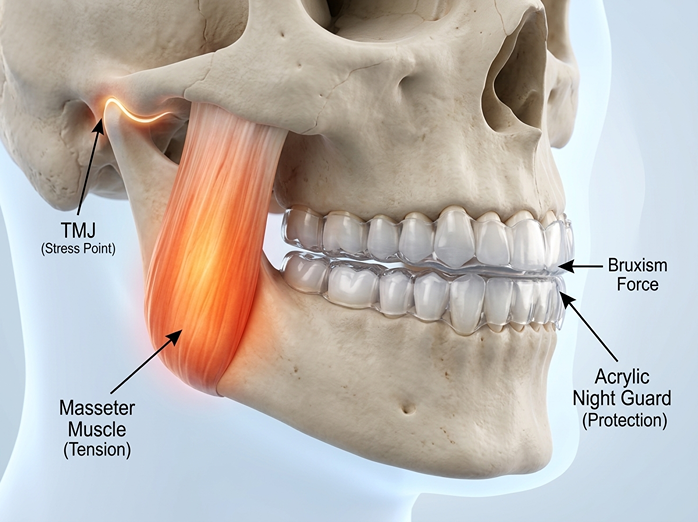
Here’s what’s going on: When you’re stressed or anxious, your body stores tension in a lot of places. One of those places is your jaw. You may grind your teeth unconsciously during the day. And at night, you might grind them, which is a habit called bruxism, while you’re completely unconscious.
A systematic review published in 2025 found a clear association between psychological factors, such as stress and anxiety, and the development of TMJ disorders and bruxism. The research found that teeth grinding and clenching put significant strain on the chewing muscles and TMJ (temporomandibular joint), resulting in the kind of pain that sneaks into your everyday life.
In a recent clinical study, it has been estimated that TMD affects 31% of adults and older adults and 11% of children and adolescents. That’s not something rare; that's one in three grown-ups.
TMJ stands for temporomandibular joint, the hinge that links your jaw to your skull. When that joint becomes irritated or inflamed, you get what’s known as TMD (temporomandibular disorder). Common symptoms are pain around the TMJ, sounds from the TMJ, pain in the masticatory muscles, and jaw functional limitations. People with TMD also often have other problems, such as headaches, earaches, neckaches, tinnitus, and sleep problems.
In other words, the stress of the workplace or managing a busy household can give rise to a whole different set of problems, unexplained ear pain, headaches your doctor can’t figure out, and a neck that never really relaxes. The jaw is the key.
This is where most people go wrong. The symptoms are episodic. One week, your jaw is fine. Next, chewing your morning toast is nearly impossible. So you think it's improving on its own.
Usually it doesn't.
Over time, chronic grinding wears down your enamel. Enamel’s not coming back. Once it’s gone, you’re looking at increased tooth sensitivity, an increased risk of cavities, and eventually cracked or chipped teeth. This also applies to crowns, veneers, and/or more complicated restorative work.
Research indicates a significant association between awake bruxism and chronic pain intensity, jaw pain, clenching pain, and headaches, and a further association of stress and depression with chronic pain and clenching pain. So if your stress levels are staying high (and for most parents and working adults in the San Fernando Valley, they are), the grinding and the pain tend to get worse, not better.
The sleep factor, as well. Bad quality of sleep has been correlated with TMD symptoms and sleep bruxism. Which means the grinding is screwing with your sleep, bad sleep causes more stress, and more stress causes more grinding. It’s a cycle that seldom sorts itself out without some form of intervention.
TMJ problems aren’t just found in people with high-pressure jobs or those under constant stress. Here are some of the most common patterns we see:
TMD is 1.5 to 3 times more common in women than men, but it absolutely affects people of all genders and all ages. If you live in the Chatsworth area and any of this sounds like your daily life, it’s worth getting checked out.
This is a field that surprises people. They think jaw pain means going to a specialist or something complicated. But most of the time, your dentist in Chatsworth, CA, is just the place to start.
At Angel Smile Dental Group, we look at the whole picture. We examine how your teeth fit together (your bite) and check for signs of wear on the enamel and look at the muscles of your jaw for tension. That clearly gives us an understanding of what is going on and what is driving it.
From there on, treatment is dictated by our findings. Some of the most common approaches are the following:
Night Guards - Custom
This is often the first step and makes a big difference. A night guard that is custom-fitted (also called an occlusal splint) offers a protective barrier between your upper and lower teeth while you sleep. It doesn’t stop the grinding, but it stops the damage. It also takes some of the pressure off the jaw joint, which decreases pain over time.
That is not the same as a one-size-fits-all guard you buy in a store or at the drugstore. Custom guards are formed from impressions of your real teeth, so they fit right and don't cause new bite problems like over-the-counter options can sometimes do.
Bite Correction
If your teeth don’t meet evenly, that imbalance could be putting extra stress on one side of your jaw. Small changes in the way your teeth come together can relieve a surprising amount of tension.
Exercise & Relief from Jaw Muscle
Gentle stretching and exercises for the jaw muscles can relieve tightness and help retrain the muscles to relax. We talk to patients about these options, and when combined with other treatments, they can be a game-changer.
Awareness & Stress & Custom
Sometimes the solution is just helping you notice what you’re doing during the day. Many people grind their teeth at stop lights, on the phone, or while concentrating. Once you’re aware of it, you can begin to break the habit.
Cleveland Clinic has medical advice on TMJ issues, including education about bruxism (the clenching and grinding of teeth) and the importance of avoiding this behavior. Stress reduction and behavior modification play a major role in treatment.
If You Need More Help
If the condition does not respond to conservative treatment, other options are available, including physical therapy, anti-inflammatory medication, or referrals to specialists. But the vast majority of TMJ cases, especially when caught early, do respond well to the above approaches. Early diagnosis and appropriate treatment can often control and, in some cases, cure TMD.
If you have kids, here’s an interesting thing to know: stress-related oral health issues aren’t just for grown-ups. Children and adolescents can also develop teeth-grinding habits, especially during stressful times such as exams or changes in school or family transitions.
Your child may grind their teeth at night, you may hear it while they sleep, or you may see them complain of soreness in their jaw or headaches in the morning. These are signs worth bringing up at their next dental visit. Early detection in children means much easier fixes and no long-term damage to developing teeth.
And frankly, when parents get their own TMJ issues treated, they’re better able to model what taking care of your health looks like. It is of interest for the family as a whole.
Many people put off calling the dentist because they don't know what to expect or they worry it's going to be a big deal. Doesn’t have to be.
When you come in to talk about jaw pain or grinding, we begin with a conversation. We ask you about your symptoms, when they started, and what makes them better or worse. Then we do a clinical examination of your teeth, bite, and jaw muscles. It usually takes less than an hour and gives us a clear starting point.
If a night guard is the right thing to do, we will take impressions that day and have the guard ready in a couple of weeks. “Most patients will notice a difference within the first few nights of wearing it.
No referral required. No waiting list for specialists. Just a simple visit from a team that knows you and your family.
There are a few signs to look for. Many people wake up with pain in their jaws, headaches, or sensitivity to their teeth. Even if you’ve never experienced symptoms, your dentist can identify signs of grinding by inspecting your enamel during a regular exam.
For many people, a custom night guard will greatly reduce pain and prevent worsening of the damage. It's not always a full cure, but it's usually the most important first step. Depending on what’s causing your symptoms, we may recommend further steps for it.
While coverage varies, many dental plans do offer at least partial coverage for a diagnostic exam and a custom night guard, especially if there is a clinical need documented. We are happy to verify your benefits before treatment so you will not have any surprises.
Yes, something to mention on your next visit. The first signs of TMJ dysfunction include clicking. Not all cases progress to pain, but knowing what’s going on gives you the option to take simple steps now rather than wait until it’s a real problem.
Several factors are converging to make this topic especially timely now:
If you've been waking up with a sore jaw, dealing with unexplained headaches, or someone has mentioned that you grind your teeth at night, those are signs. These are not things you just have to live with.
For years, Angel Smile Dental Group has been helping families in Chatsworth take care of their smiles and the health behind them. We're local. We speak English and Spanish. We accept most major PPO insurance plans.
Call us at (818) 884-4422 or visit us at 21902 Devonshire St., Chatsworth, CA 91311 to book your appointment today. Or you can schedule online at angelsmiledentalgroup.com.
Your jaw will be grateful. The rest of you will as well.


