
Mon - Fri: 8:30am - 5:30pm, closed Wednesday

21902 W. Devonshire St, CA 91311


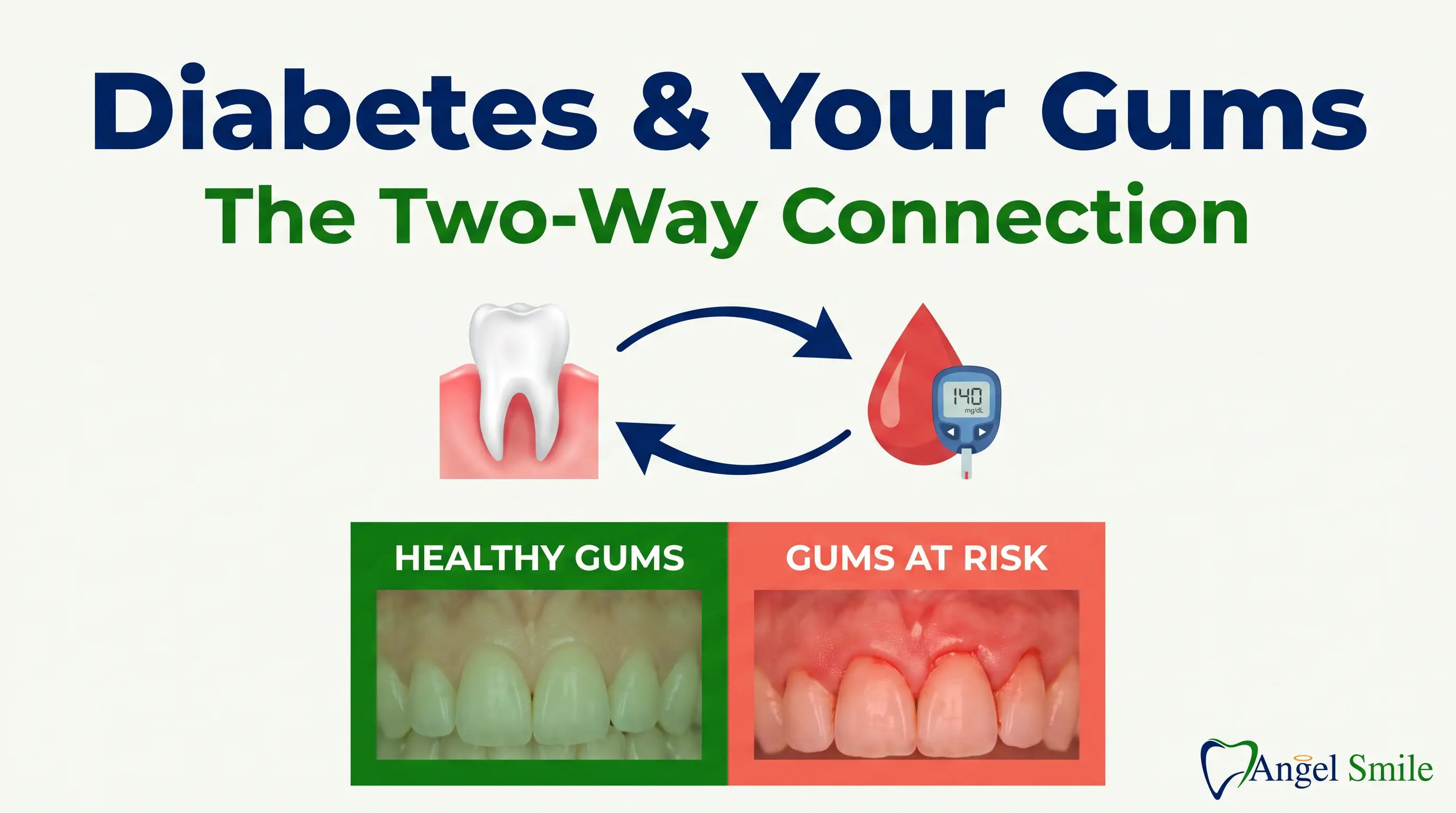
Diabetes and gum disease are closely linked, and the connection runs both ways. High blood sugar makes your gums more likely to get infected, and infected gums make blood sugar harder to control. So if you or someone in your family lives with diabetes or prediabetes, your gums need extra attention, not less. The American Academy of Periodontology reports that people with diabetes are two to four times more likely to develop gum disease than people without it. The good news is that this is manageable, and a few simple habits protect both your smile and your health.
Gum disease is common to begin with. The CDC reports that about 42 percent of adults age 30 and older already have periodontitis, a serious form of gum disease. Add diabetes to the picture and that risk climbs. Knowing why helps you stay ahead of it.
Your mouth is full of bacteria. When plaque builds up along the gumline, those bacteria irritate the gums, which swell, redden, and bleed. That early stage is called gingivitis, and it can grow into periodontitis, where the gums pull away from the teeth and the bone that holds them starts to shrink.
Diabetes changes how your body handles that fight. High blood sugar feeds the bacteria, weakens the immune response, and slows healing. Your gums have a harder time bouncing back from everyday irritation, so a small problem that a healthy mouth would shrug off can turn into a real infection.
Blood flow matters too. Diabetes can narrow the tiny blood vessels that feed your gums, which means less oxygen and fewer nutrients reach the tissue that keeps teeth anchored. Weaker gums, slower healing, and hungry bacteria are a tough combination, and that is why diabetes and gum disease so often show up together.
This is not only a concern for people who already have a diagnosis. Prediabetes counts too. Blood sugar that runs a little high for years quietly raises your gum risk before you ever hear the word diabetes at a doctor's office. That is one reason bleeding or sore gums are worth taking seriously at any age, because sometimes your mouth notices a blood sugar problem before the rest of your body does.
Here is the part most people miss. The link is a two-way street. Infected gums do not just sit quietly in your mouth. They raise the level of inflammation in your whole body, and that inflammation makes your cells more resistant to insulin. The result is blood sugar that runs higher and swings harder, even when you are doing everything else right.
The American Academy of Periodontology puts it plainly: gum disease raises a person's systemic inflammatory signals, which increase blood sugar. So an untreated gum infection can quietly work against your A1C every single day.
The flip side is genuinely hopeful. The CDC notes that treating gum disease significantly improves blood sugar control among people with diabetes compared to no treatment or routine care. Clean up the infection and you often help your numbers at the same time. That is a rare win where one visit to the dentist supports the work you and your doctor are already doing.
Pro tip: Tell your dentist about your diabetes, and tell your doctor about your gums. When your dental and medical care talk to each other, you get better results on both sides. Bring your most recent A1C to your dental visit and mention any gum bleeding at your next diabetes checkup.
Gum disease is quiet, especially early on, so it helps to know exactly what to look for. If you or a family member has diabetes, treat any of these as a reason to book a visit rather than wait and see.
See a dentist soon if you notice:
Dry mouth deserves a special mention. Many people with diabetes make less saliva, and saliva is your mouth's natural rinse. Less of it means more plaque, more cavities, and more gum trouble. The CDC reports that adults age 20 or older with diabetes are 40 percent more likely to have untreated cavities than similar adults without diabetes. If your mouth feels dry a lot, that is worth raising with your dentist. Not sure whether your symptoms count as urgent? Our guide on when to see a dentist for gum pain breaks down what can wait and what cannot.
You have more control here than it might feel like. Protecting your gums when you have diabetes comes down to a handful of habits done consistently, not perfectly.
Keep your blood sugar in your target range. This is the single most powerful thing you can do for your gums. Stable blood sugar means a stronger immune response and gums that heal the way they should. Your dental health and your diabetes plan pull in the same direction.
Brush twice a day and floss once. Gentle, thorough cleaning removes the plaque that starts the whole problem. A soft-bristled brush works fine, and if you use an electric one, our post on how to use an electric toothbrush the right way shows the technique that clears plaque without hurting your gums. Flossing reaches the spots below the gumline that a brush cannot.
Do not skip your cleanings. Regular checkups catch small problems while they are still cheap and easy to fix, and a professional cleaning removes the hardened tartar that brushing leaves behind. People with diabetes often benefit from visits more than twice a year. Our team explains why regular dental checkups matter so much, and our daily dental care routine is a simple place to start at home.
Fight dry mouth. Sip water through the day, chew sugar-free gum to get saliva flowing, and ask your dentist about rinses made for dry mouth. Skip the sugary drinks that feed bacteria and spike your blood sugar at the same time.
Do not smoke. Smoking and diabetes each raise your gum disease risk, and together they multiply it. Quitting is one of the best moves you can make for your gums and the rest of your body.
This connection hits our community hard. Diabetes is more common among Hispanic and Latino families, and gum disease often goes untreated when language, cost, or fear get in the way of care. The CDC found that about 60 percent of US adults with diabetes had a medical visit in the past year but no dental visit. That gap is exactly where problems grow.
Consider a real pattern we see. A Canoga Park grandfather managing type 2 diabetes noticed his gums bled a little, but he figured it was minor and skipped the dentist for two years. By the time a tooth felt loose, the gum infection had spread and his blood sugar had been running high the whole time. What could have been a routine cleaning and a technique fix turned into gum treatment costing well over $1,500, plus months of harder blood sugar control. From our experience working with families across the San Fernando Valley, the folks who come in at the first sign of bleeding almost always have the easiest, most affordable path back to healthy gums.
Cost should never be the reason you wait. If you are unsure about coverage, our comparison of insurance versus membership for uninsured families lays out real options, and these money-saving tips help you get the most from every visit. If dental anxiety is what holds you back, you are far from alone, and you can read how our Chatsworth office supports anxious patients before you ever walk in.
Yes. An untreated gum infection increases inflammation throughout your body, which makes your cells more resistant to insulin and can push your blood sugar higher. That is why treating gum disease often helps people with diabetes get better control of their numbers. It works in both directions, so caring for your gums is part of caring for your diabetes.
Most people do well with two cleanings a year, but many with diabetes benefit from more frequent visits, sometimes every three or four months. Your dentist sets the right schedule based on your gum health and how stable your blood sugar is. More frequent checkups catch trouble early, when it is simplest and cheapest to treat.
Diabetes can reduce saliva, and some diabetes medications add to the effect. Dry mouth is more than a nuisance, because saliva washes away food and bacteria that cause cavities and gum disease. Sip water often, chew sugar-free gum, and tell your dentist so they can suggest a rinse or product that helps.
Research points that way. The CDC reports that treating gum disease significantly improves blood sugar control compared to no treatment or routine care. It is not a replacement for your medication, diet, and exercise, but clearing up a gum infection removes one hidden source of inflammation that works against your numbers.
Children and teens with diabetes can develop gum problems earlier than their friends, so good habits matter even more for them. Help younger kids brush and floss well, keep up with regular checkups, and mention the diabetes to your dentist so they know to watch the gums closely. Building the routine young protects their teeth for life and keeps small issues from turning into painful ones.
Diabetes and gum disease are connected, but that connection can work in your favor. Steady blood sugar, gentle daily cleaning, and regular dental visits protect your gums, and healthy gums make your diabetes easier to manage. If your gums have been bleeding, sore, or dry, that is your cue to get checked, not to wait. Our friendly, bilingual team in Chatsworth is happy to take a look, keep you comfortable, and work alongside the care you already get from your doctor.


