
Mon - Fri: 8:30am - 5:30pm, closed Wednesday

21902 W. Devonshire St, CA 91311


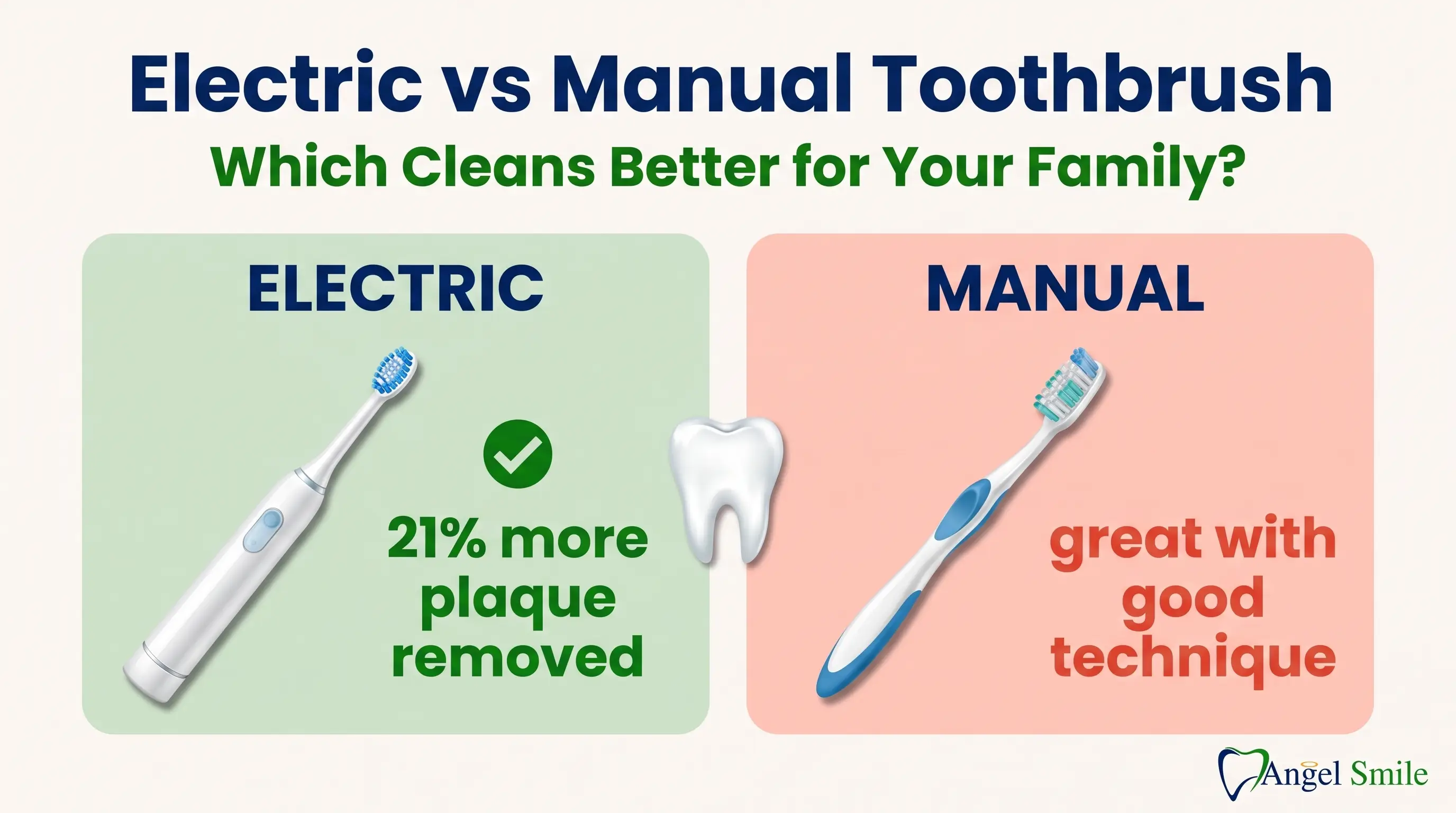
Here is the short answer. For most people, an electric vs manual toothbrush debate comes down to technique, not the brush. A large research review found that powered brushes with an oscillating head removed about 21 percent more plaque and cut gum bleeding by 11 percent after three months of use, compared with manual brushing. That edge is real, but a manual brush used well still cleans teeth just fine. What matters most is that someone in your family actually brushes twice a day, for two full minutes, and reaches every tooth.
So the better question is not which brush wins on paper. The better question is which brush helps each person in your home brush longer, softer, and more often. That is what this guide sorts out, with plain talk and no sales pitch.
A toothbrush has one job, which is to break up the sticky film of bacteria called plaque before it hardens into tartar. Both brush types do this. The difference is how much help the brush gives you.
The most trusted evidence comes from a Cochrane review of powered versus manual toothbrushing, which pooled dozens of studies. It found that powered brushes reduced plaque by 11 percent at one to three months and by 21 percent after three months. Gum inflammation, measured by bleeding, dropped by 6 percent early on and 11 percent after three months. Those are meaningful numbers, especially for anyone whose gums bleed when they brush.
Here is the honest caveat. The American Dental Association is clear that both manual and powered brushes remove plaque effectively when you use them correctly. Plenty of people with perfect checkups have never owned an electric brush. So the research does not say a manual brush fails. It says a good electric brush makes the average person a little more thorough, mostly because it keeps a steady motion and does not depend on your wrist doing the work.
Pro tip: The single biggest upgrade for either brush is a built-in two-minute timer. Most people brush for only 45 to 70 seconds and swear it felt like two minutes. A timer, whether it is on the brush or your phone, closes that gap instantly.
An electric toothbrush earns its price in a few specific situations. The vibrating or rotating head does the scrubbing, so you only guide it tooth to tooth. That helps a lot of real people who struggle with a manual brush.
Kids and teens tend to rush. A powered brush with a two-minute timer and a 30-second buzzer for each mouth section turns brushing into a simple game of "wait for the beep." Parents at our Chatsworth office often tell us the timer ended the nightly fight faster than any lecture did. If you want a full nightly plan, our team wrote a simple 5-minute daily routine for healthy kids' teeth that pairs well with any brush.
Seniors and anyone with arthritis, hand tremors, or limited grip get the clearest benefit. The thick handle and automatic motion mean sore hands do less work. We see this every week with older patients who kept brushing well into their 80s once the brush stopped fighting them.
People with braces or bridgework also do better with a powered head, since the bristles reach around brackets and margins that a manual brush skims past. If you are weighing tooth replacement down the road, the same careful cleaning habit protects the work, which we cover in our guide on dental implants for seniors.
One more group benefits: heavy-handed brushers. If your manual brush bristles splay out flat within a month, you are scrubbing too hard and wearing down your gumline. Many electric brushes have a pressure sensor that lights up or slows down when you press too hard. That single feature can stop years of gum recession.
A manual toothbrush is not a downgrade. It is the right pick for a lot of families, and not only because it costs a few dollars instead of forty or more.
Control is the big one. A manual brush lets you feel exactly where the bristles are and adjust the angle in real time. Skilled brushers, and people who already have healthy gums and clean checkups, often see no meaningful gain from switching. If your hygienist says your home care looks great, your brush is doing its job.
Manual brushes also travel without a charger, cost little to replace, and never die mid-trip. For toddlers just learning, a small soft manual brush is easy for a parent to guide hand over hand. And for households watching every dollar, a two-dollar soft brush swapped out every three months beats an expensive brush used until the bristles are shot.
Quick way to decide who needs which:
The brush is only half the story. Technique is the other half, and it decides most checkups. These habits matter more than the price tag on your brush.
Always pick soft bristles. Medium and hard bristles do not clean better, they just scratch enamel and push gums back. Angle the bristles at about 45 degrees toward the gumline, where plaque hides, and use small gentle circles rather than a hard back-and-forth saw. With an electric brush, skip the scrubbing entirely and let the head sit on each tooth for a few seconds as you glide along.
Brush for two full minutes, twice a day, and split your mouth into four sections so each gets 30 seconds. Do not rush the back molars or the inside surfaces behind your lower front teeth, which are the two spots almost everyone misses. Our hygienists share more of these small fixes in our daily dental care tips.
Brushing alone reaches only about three of the five surfaces on each tooth, so clean between them once a day too. If your gums bleed when you brush or floss, that is not a reason to stop, it is a sign of early gum inflammation you should get checked. We explain the warning signs in our guide on sore or bleeding gums and when to see a dentist.
Pro tip: Replace your brush or brush head every three months, or sooner if the bristles fray or splay. A worn brush cleans far less, and a used brush after a cold or flu can reseed the same germs. Set a reminder for the first of every season and you will never overthink it.
Cost is where families hesitate, and that is fair. A solid electric brush runs about 30 to 200 dollars up front, plus replacement heads that cost 5 to 12 dollars every few months. A good manual brush runs 2 to 6 dollars and needs the same seasonal swap. Over a year, an electric habit might cost 60 to 100 dollars once you own the handle, while manual brushing stays under 25 dollars.
So is the gap worth it? For a family in Chatsworth with a teen who barely brushes and a grandparent with arthritis, yes. The timer and easy grip pay for themselves in fewer cavities and calmer bedtimes. For a healthy adult with clean checkups, a manual brush spends that money better on floss and regular cleanings. Speaking of which, no brush replaces a professional cleaning, and skipping those is where real costs pile up, as we cover in the benefits of regular dental check-ups.
What we tell families here is simple. Buy the brush that gets used, not the fanciest one on the shelf. A 40-dollar electric brush that a kid loves beats a 200-dollar model that sits in a drawer.
Most homes do best with a mix, not one rule for everyone. Match the brush to the person, not to a trend.
For young kids, start with a soft manual brush and a rice-grain smear of fluoride toothpaste, then move to a kid-sized electric brush around age six or seven once they can spit reliably. For teens, an electric brush with a timer tends to win, since it fights the rushing. For busy parents, either works, so pick whatever you will actually reach for at 11 p.m. For grandparents, lean electric for the grip and the automatic motion.
Whatever you choose, the brush works best alongside two things: cleaning between teeth daily and seeing a dentist twice a year. If your family is still looking for a dental home in the West San Fernando Valley, our guide on how to pick a family dentist near you walks through exactly what to look for.
Parents shopping specifically for children's care will also want to read what to look for in a kids' dentist before booking that first visit.
Slightly, on average. Research shows powered brushes remove about 21 percent more plaque and reduce gum bleeding after three months of use. The gap is real but small, and a manual brush used with good technique still keeps teeth healthy. The best brush is the one that gets used correctly twice a day.
Both. The American Dental Association accepts both types and confirms that each removes plaque effectively when used properly. We usually suggest an electric brush for kids, seniors, brace-wearers, and heavy scrubbers, and either type for a healthy adult with good habits.
Every three months, or sooner if the bristles look frayed or bent. Worn bristles clean poorly. It is also smart to swap your brush after a cold, the flu, or strep so you are not reintroducing germs.
Yes. Hard scrubbing and stiff bristles wear away enamel and push gums back, which can cause sensitivity and recession. Use soft bristles, a gentle circular motion, and light pressure. Many electric brushes include a pressure sensor that warns you when you press too hard.
The electric vs manual toothbrush question has a simple bottom line: the brush that wins is the one used well, twice a day, for two minutes, with soft bristles and a light touch. An electric brush gives kids, seniors, and heavy brushers a helpful nudge, while a manual brush is plenty for anyone with steady habits and healthy gums. Pick per person, clean between teeth daily, and keep your checkups.
Not sure how your family's brushing is holding up, or whose gums need a closer look? Our team in Chatsworth is happy to check and show you the exact spots to work on. Book a Free Consultation and we will build a simple home-care plan that fits everyone in your house.
• Teeth Tips: How to Use an Electric Toothbrush the Right Way
• Beyond Brushing: The 5-Minute Daily Routine for Healthy Kids' Teeth
• Sore or Bleeding Gums? When to See a Dentist in Chatsworth
• How to Pick a Family Dentist Near You (Without the Guesswork)


