
Mon - Fri: 8:30am - 5:30pm, closed Wednesday

21902 W. Devonshire St, CA 91311


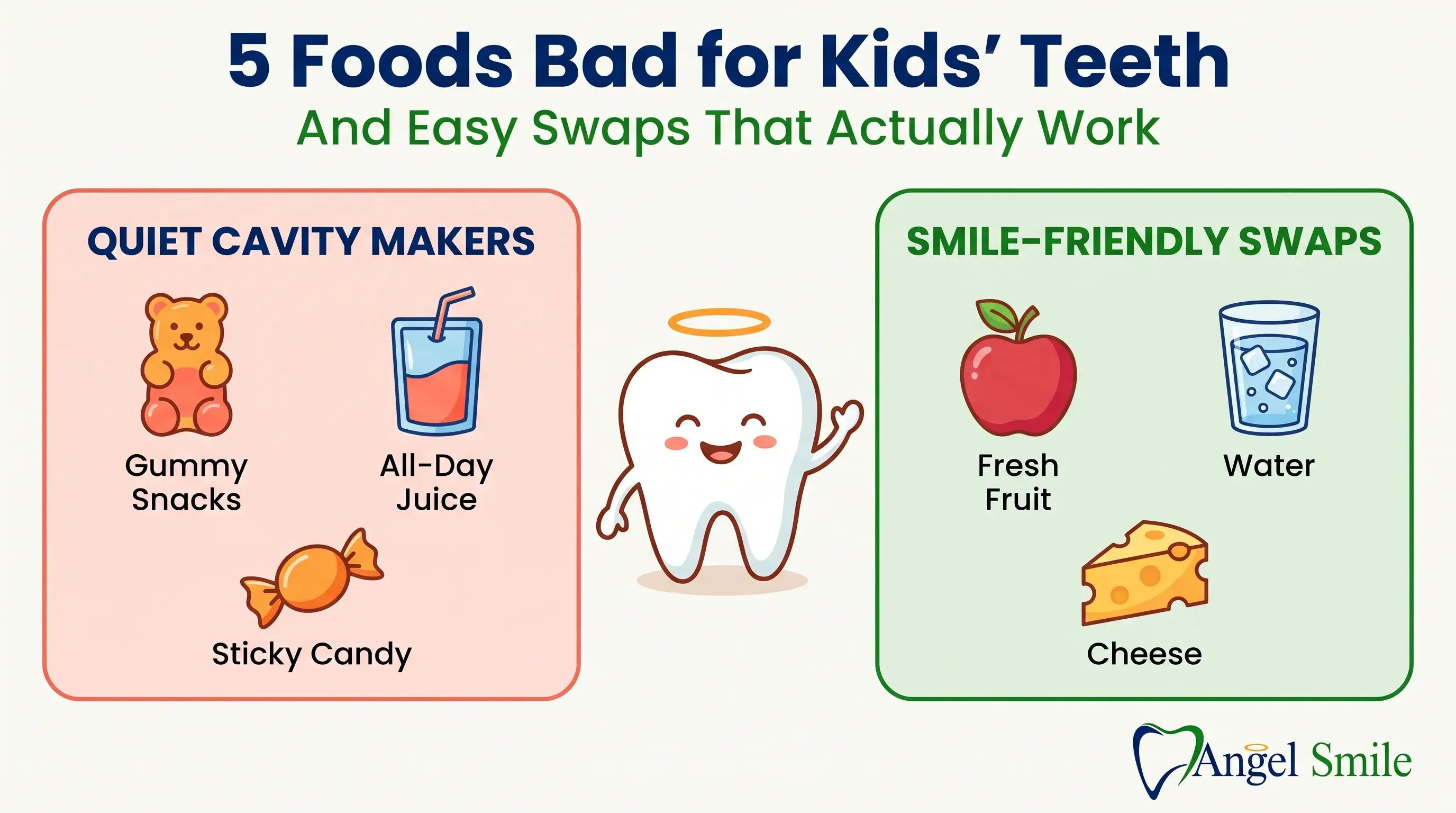
The foods most likely to be bad for kids' teeth are the sticky, sugary, sip-all-day ones: gummy fruit snacks, juice and soda, and refined crackers and chips that turn to paste and cling to little molars. Those are the quiet cavity makers, and they do damage between meals more than at them. Here is the number that surprises most parents: about half of children aged 6 to 9 have already had a cavity in a baby or permanent tooth, according to the Centers for Disease Control and Prevention. The good news is that a few small swaps at snack time protect your child's smile more than almost anything else you can do at home.
We put together this guide for busy Chatsworth and Canoga Park families who want a straight answer, not a lecture. You will get the five worst offenders, why each one hurts, and an easy swap for every single one.
A food is bad for kids' teeth when it feeds the bacteria that cause decay and stays in the mouth a long time. Here is the short version of how a cavity starts. Sugar is the food for the bacteria living on your child's teeth, and those bacteria produce acid that etches away enamel, the American Dental Association explains. Every time your child eats or drinks something sugary, a fresh acid attack begins, and it takes a while for saliva to wash that acid away.
Two things decide how much harm a food does. The first is how often your child eats it. Ten gummy bears eaten in two minutes cause one acid attack. Ten gummy bears eaten one at a time across an afternoon cause a dozen. The second is how long the food sticks around. Dried fruit and gummy snacks take a long time to clear from the mouth and often cling to tooth surfaces for hours, which feeds those bacteria far longer than a liquid sugar would.
So the real problem is rarely a birthday cupcake. The real problem is the slow drip of sugar all day: the juice pouch at 10, the fruit snacks at noon, the crackers at 2, the sports drink after soccer. If your child already complains that cold or sweet things hurt, that can be an early warning sign, and our guide on why teeth get sensitive walks through what that means.
Pro tip: Sugar timing matters more than sugar amount. If your child is going to have a treat, serve it with a meal instead of as a stand-alone snack. Meals bring a rush of saliva that helps neutralize acid, so the same cookie does less damage at lunch than it does alone at 3 p.m.
These are the five snacks we see behind small cavities most often in kids across the San Fernando Valley. None of them are evil, and you do not have to ban them. You just want to know where the risk hides so you can manage it.
Those little fruit-shaped pouches feel like a healthy choice because the box says fruit. The texture is the trap. Gummy snacks, fruit leather, and even raisins and dried mango are sticky enough to pack into the grooves of back teeth and stay there, sometimes for hours. That gives cavity bacteria a long, steady meal in the exact spots a toothbrush misses most.
Fresh fruit is a different story. An apple or a handful of grapes brings water and fiber and clears quickly. It is the concentrated, chewy, dried and gummy versions that do the quiet damage. Sealants can add real protection to those deep molar grooves, and our post on dental sealants for kids explains how that works.
Sipping sugary drinks all day is one of the hardest habits on a child's teeth, because each sip restarts the acid clock. Letting a child sip juice throughout the day or at bedtime puts their teeth at real risk, since the bacteria get more time to make acid, the ADA warns. Soda and sports drinks add their own acid on top of the sugar, and one 2016 study found that nearly a third of the teens studied showed tooth erosion tied to sugary beverages.
Juice is fine in the right dose at the right time. The ADA suggests capping 100 percent juice at about 4 ounces a day for ages 1 to 3, 4 to 6 ounces for ages 4 to 6, and up to 8 ounces for ages 7 and up, served with a meal rather than sipped for hours. Water and plain milk are the everyday drinks that keep teeth happy.
Goldfish, saltines, pretzels, and potato chips do not taste sweet, so they slip past most parents' radar. Your child's saliva starts breaking those refined carbs into sugar almost immediately, and the soft, starchy paste they turn into wedges into molar grooves just like candy does. A cracker that dissolves into glue on the back teeth can feed bacteria as long as a gummy bear.
These snacks are not off limits, but they belong at the table, not in a bag your child grazes from for an hour in the car. Pairing them with a crunchy vegetable, a piece of cheese, or a drink of water helps clear the residue faster.
Caramels and taffy glue themselves to teeth, and lollipops and hard candy bathe the mouth in sugar for as long as they last. A lollipop that takes fifteen minutes to finish is a fifteen-minute acid attack. This is the category most parents already suspect, and they are right to.
If your child loves candy, the kinder-to-teeth picks are the ones that clear fast: a small piece of chocolate melts and rinses away far quicker than a chewy caramel. Follow any treat with water, and save the stickiest stuff for right after a meal.
This last group is the sneakiest, because these foods wear a health halo. A single kids' yogurt cup can carry more added sugar than a cookie. Flavored milks, sweetened oatmeal, and most granola or breakfast bars are loaded with sugar and, in the bar's case, the sticky texture that clings to teeth. The U.S. Dietary Guidelines suggest keeping added sugar under about 10 grams per meal for kids, and these products can blow past that in one serving.
Plain yogurt with fresh fruit, plain milk, and unsweetened oatmeal give you the same nutrition without the sugar load. Reading the added-sugar line on the label for a week is eye opening, and it makes the swaps below much easier to stick with.
You do not need a perfect pantry. You need a handful of go-to swaps that are almost as easy to grab as the sugary version. Here are the trades we suggest most to parents, grouped so you can screenshot this section for the grocery store.
Instead of these sticky snacks:
Reach for these instead:
Instead of these sip-all-day drinks:
Reach for these instead:
Instead of these refined-carb grazers:
Reach for these instead:
Good food is only half the job. A solid brushing routine locks it in, and our 5-minute daily routine for healthy kids' teeth shows the exact steps that work even with a squirmy toddler.
Fluoride adds another layer of defense on top of good snacking, and you can read how it protects young enamel in our guide to fluoride treatments for children.
What we have seen working with parents across Chatsworth, Canoga Park, and Northridge is that the sugar itself is rarely the surprise. The surprise is the timing. One Canoga Park mom came in worried about her 6-year-old after a school screening flagged a spot. The culprit was not candy at all. It was a juice pouch her son sipped slowly through every morning and a bag of crackers he grazed on during homework. He had four tiny cavities forming, all in the grooves of his back molars.
Because we caught them early, each one was a simple filling in the range of about 150 dollars. Had those gone another year, a couple would likely have reached the nerve and needed pulp treatment plus a crown, which can run 900 dollars or more per tooth. We swapped the all-day juice for water, moved crackers to a single snack time, and added sealants. At his next two checkups, no new cavities. That is the whole game: small changes, caught early.
Regular checkups are how those small spots get found before they hurt or cost real money. If it has been a while, our post on how often kids should get a dental cleaning lays out a sensible schedule.
If you are watching for trouble between visits, the signs your child needs a dentist is worth a quick read so you know what to act on.
For our Spanish-speaking families, we also have a full guia para familias latinas that covers first visits and cleanings.
Fresh fruit is generally fine and much better than processed sweets. Bananas and dried fruit are stickier and more sugary than an apple or berries, so rinse with water or brush after, and serve them with a meal when you can. The bigger risk is dried and gummy fruit, not fresh.
The type of juice matters less than how it is served. Even 100 percent juice is concentrated sugar, so the risk comes from sipping it all day or at bedtime. Cap it at the age-based serving the ADA suggests, give it with a meal, and make water the between-meal drink.
Cheese, plain yogurt, crunchy raw vegetables, fresh fruit, nuts for older kids, and plain water are the standouts. Cheese and other dairy help balance acid in the mouth, and crunchy produce brings water and gentle cleaning. Pair a starchy snack with one of these to lower its impact.
Diet is one piece, and genetics, saliva, tooth grooves, and brushing all play a part. Deep molar grooves trap food no matter how healthy the snack, which is why sealants and fluoride help so much. A checkup can pinpoint what is driving it for your child specifically.
Wait about 30 minutes if the snack was acidic, like soda or citrus, because enamel is softened right after and brushing too soon can wear it down. For most snacks, rinsing with water right away and brushing twice a day is the practical routine that protects teeth without the guesswork.
The foods bad for kids' teeth are mostly the ones that stick around and get eaten a little at a time all day. You do not have to run a sugar-free house. Move treats to mealtimes, make water the default drink, trade the stickiest snacks for the swaps above, and keep up regular checkups so any small spot gets caught while it is still cheap and painless to fix. Those few habits protect your child's smile for years.
Want a dentist who treats your kids gently and helps your whole family build these habits without the guilt trip? Book a Free Consultation with Angel Smile Dental Group in Chatsworth, and we will help you build a snack plan that fits real family life.


