
Mon - Fri: 8:30am - 5:30pm, closed Wednesday

21902 W. Devonshire St, CA 91311


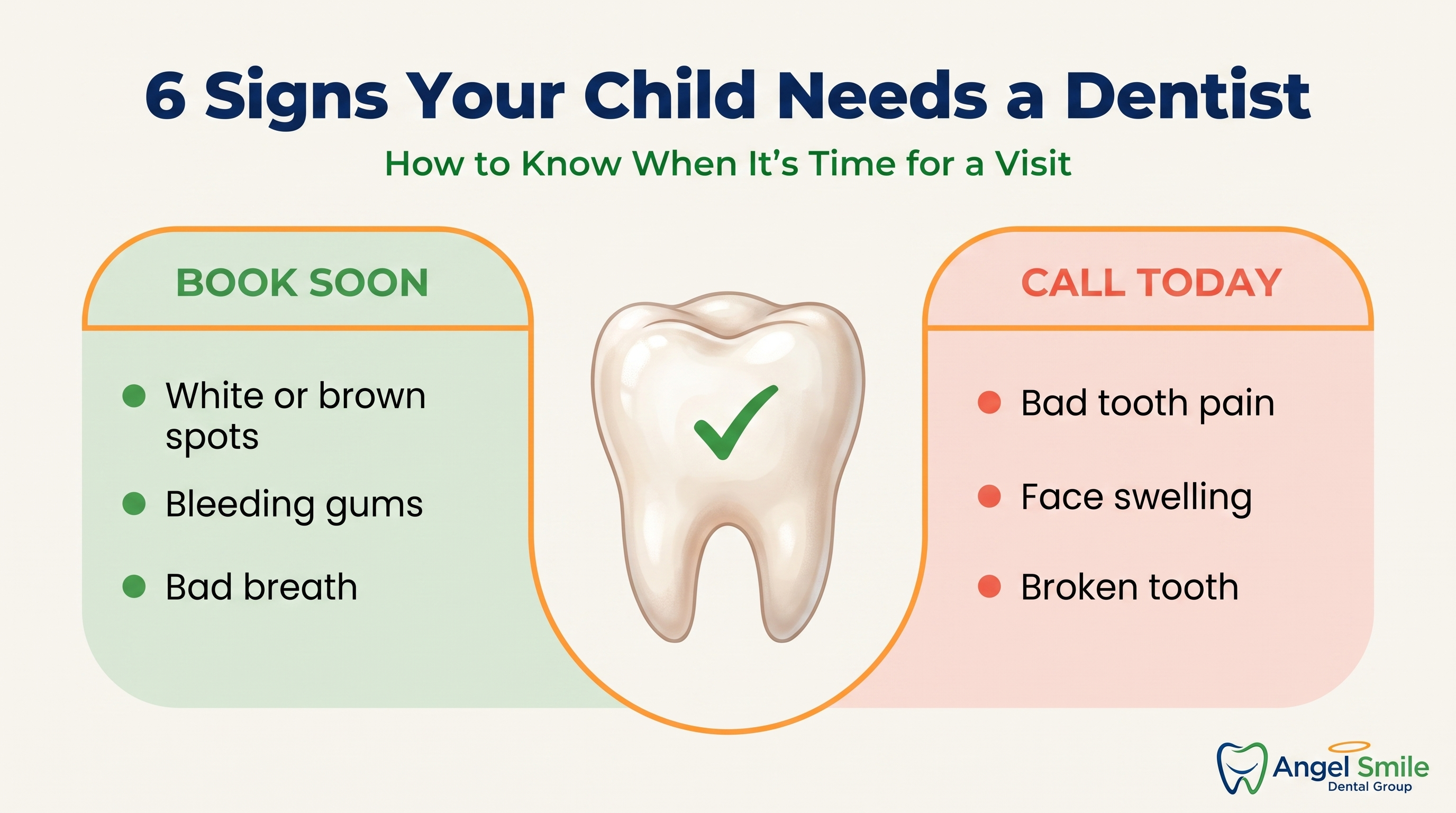
Here is the short answer: the clearest signs your child needs a dentist are tooth pain that lasts more than a day or two, white or brown spots on the teeth, bleeding or puffy gums, bad breath that sticks around, a tooth that looks loose at the wrong age, and any avoidance of chewing on one side. Half of children aged 6 to 9 have already had a cavity in a baby or permanent tooth, according to the CDC, so these red flags are common, and most are easy to fix when you catch them early. Here is how to tell what needs a visit now and what can wait for a regular checkup.
Your child will not always tell you their mouth hurts. Little kids often cannot name the feeling, and older kids sometimes hide it because they are scared of the dentist. So the job falls to you to spot the signals. The good news is that the signals are usually visible at the bathroom sink or across the dinner table once you know what to look for.
We care for families across Chatsworth, Canoga Park, and Northridge every week, and the pattern is almost always the same. The problems parents catch early cost a little and heal fast. The ones that wait turn into bigger visits, more numbing, and a scared kid. This guide walks you through the exact signs your child needs a dentist, sorted by how urgent each one is.
A dental warning sign is any change in how your child's teeth, gums, breath, or eating habits look and feel. Some are true emergencies. Most are simply your cue to book a visit within a week or two. The signs your child needs a dentist fall into three buckets: pain signals, look signals, and behavior signals.
Pain signals you can ask about:
Look signals you can see:
Behavior signals you can watch for:
One or two of these does not always mean trouble, but it does mean a professional set of eyes is worth it. If your child has never been seen, that alone is a reason to book. The American Academy of Pediatric Dentistry recommends a first dental visit when the first tooth appears or no later than the first birthday, and a checkup every six months after that. Many kids in our chairs are well past that first visit and overdue.
These are the six signals we tell parents to act on. They are ranked from the most urgent down to the ones you can book soon rather than today.
A quick twinge after a cold drink is usually fine. Pain that lingers past 24 to 48 hours, throbs, or wakes your child at night is not. Lasting pain often means decay has reached the sensitive inner layer of the tooth. If the pain is severe, the face is swollen, or your child has a fever, treat it as urgent and read our guide on the signs a child's toothache cannot wait. When pain shows up, waiting rarely makes it cheaper or easier.
Chalky white spots near the gumline are early decay, and they are reversible at that stage. Brown or black spots usually mean a cavity has formed. Parents often miss these because they blend in, so check the back molars and the inside surfaces with a flashlight. Catching a white spot early can mean a simple fluoride treatment for your child instead of a filling.
Healthy gums are firm and pink. Gums that bleed when your child brushes, or that look red and swollen, are a sign of early gum inflammation from plaque. Kids get gingivitis too, and it is reversible with better brushing and a cleaning. Bleeding that keeps coming back deserves a look, the same way it would for an adult who notices their gums bleed when they brush.
Morning breath is normal. Breath that stays bad all day even after brushing can point to trapped food, a cavity, or gum trouble. It can also come from mouth breathing or tonsil issues. Persistent bad breath in a child is worth mentioning at a visit rather than covering with mints.
Wiggly teeth are exciting when your child is 6 or 7. A loose tooth in a toddler, or a loose permanent tooth in an older child, is not normal and can signal injury or infection. The same goes for a chip or crack after a fall or a sports hit. A small chip today can turn into a bigger break later, so have it checked. Building a solid daily dental routine for healthy kids' teeth helps prevent many of these.
Kids vote with their mouths. When a child suddenly chews on one side, turns down crunchy foods, or cries at mealtime, a sore tooth is often the reason. Younger children who cannot explain the pain may just get fussy, drool more, or sleep poorly. Trust the change in behavior even when you cannot see anything wrong.
Pro tip: Do a 30-second 'flashlight check' once a week during brushing. Lift your child's lip, shine a phone light on the front and back teeth, and look for spots, puffy gums, or chips. Snap a photo of anything odd so you can compare next week. Parents who do this catch problems weeks before they turn painful.
Not every warning sign means a same-day visit. Sorting them keeps you calm and saves you a panicked drive. Here is how we split them for Chatsworth parents.
Call us today (urgent):
Book within a week or two (prompt):
Bring it up at the next checkup (routine):
When something lands in the urgent column, do not wait for business hours to decide. Our team keeps room for kids' emergencies, and you can learn what we handle in our overview of emergency dental services for children. When it lands in the prompt or routine column, a normal appointment is the right call.
The signs your child needs a dentist change as they grow. What worries you in a toddler is different from what matters for a teen. Here is a quick map by stage.
Babies and toddlers, ages 0 to 3:
Young kids, ages 4 to 9:
Preteens and teens, ages 10 to 17:
From our years caring for West San Fernando Valley families, the single most common miss is decay hiding in the back molars of grade-schoolers. Those chewing surfaces have deep grooves that trap food, and a child rarely feels it until it reaches a nerve. That is exactly why dental sealants for kids are worth asking about at your next visit.
Small problems are cheap and gentle to fix. Big ones are not. A cavity caught as a white spot may need nothing more than fluoride and better brushing. The same tooth left for six months can need a filling. Left a year, it can need a nerve treatment and a crown, plus a numb, nervous child in the chair.
Here is a real pattern we see. A Canoga Park mom brought her 7-year-old in after noticing he chewed only on the left side. A back molar had a cavity we caught early, and the fix was one small filling for around 150 dollars. A neighbor's child with the same complaint waited three months hoping it would pass. That tooth needed a pulp treatment and a crown that ran close to 900 dollars, plus two visits. Same starting sign, very different endings.
Money is only part of it. Early visits keep dental care calm and boring, which is exactly what you want for a kid. A child whose first real experience is an emergency learns to fear the office. A child who comes in for quick, painless checkups learns it is no big deal. If your little one already gets anxious, our tips on helping anxious kids love the dentist can make the next visit easier. Cost worries are normal too, and we work with families to find a plan that fits.
Look for white or brown spots along the gumline, especially on the front teeth, and watch for fussiness at mealtime or refusing to chew. Toddlers cannot describe pain well, so behavior is your best clue. Bottle or juice at bedtime raises the risk, so mention that history to the dentist. A quick exam settles it fast.
The American Academy of Pediatric Dentistry recommends a first visit when the first tooth appears or no later than the first birthday, then a checkup every six months. Early visits are short and gentle, and they catch problems before they hurt. If your child is older and has never been seen, book now rather than waiting for a symptom. You can read what to expect at your child's first dental visit.
Gums that bleed a little during brushing are usually early gingivitis from plaque, and better brushing plus a cleaning reverses it. Bleeding that keeps coming back, or gums that are very red and swollen, deserves a visit. Kids with braces bleed more easily because plaque hides around brackets. Do not ignore it just because your child is young.
Daily brushing that misses the back teeth or the tongue can still leave odor-causing bacteria. Bad breath can also point to a cavity, trapped food, mouth breathing, or tonsil stones. If it lasts all day and does not clear after a good brushing and flossing, have it checked. It is often a simple fix once the cause is found.
Yes. Baby teeth hold space for adult teeth and help your child chew and speak. A decayed baby tooth can hurt, get infected, and damage the permanent tooth forming underneath. Some baby molars stay in the mouth until age 10 to 12, so a cavity at 6 has a long time to cause trouble. Treating it protects the smile that follows.
You know your child better than anyone. When you notice the signs your child needs a dentist, whether it is a spot on a tooth, a puffy gum, or a kid who suddenly will not chew on one side, a quick visit is almost always the smart move. Early care is gentler, cheaper, and far less scary than waiting for pain to force your hand. Half of kids have a cavity by age 9, so you are in good company, and none of this means you did anything wrong. It just means it is time for a checkup.
Our team at Angel Smile Dental Group has helped Chatsworth families keep little smiles healthy for years, and we would love to help yours. Book a Free Consultation and we will take a gentle look, answer your questions, and build a simple plan that fits your family and your budget.


