
Mon - Fri: 8:30am - 5:30pm, closed Wednesday

21902 W. Devonshire St, CA 91311


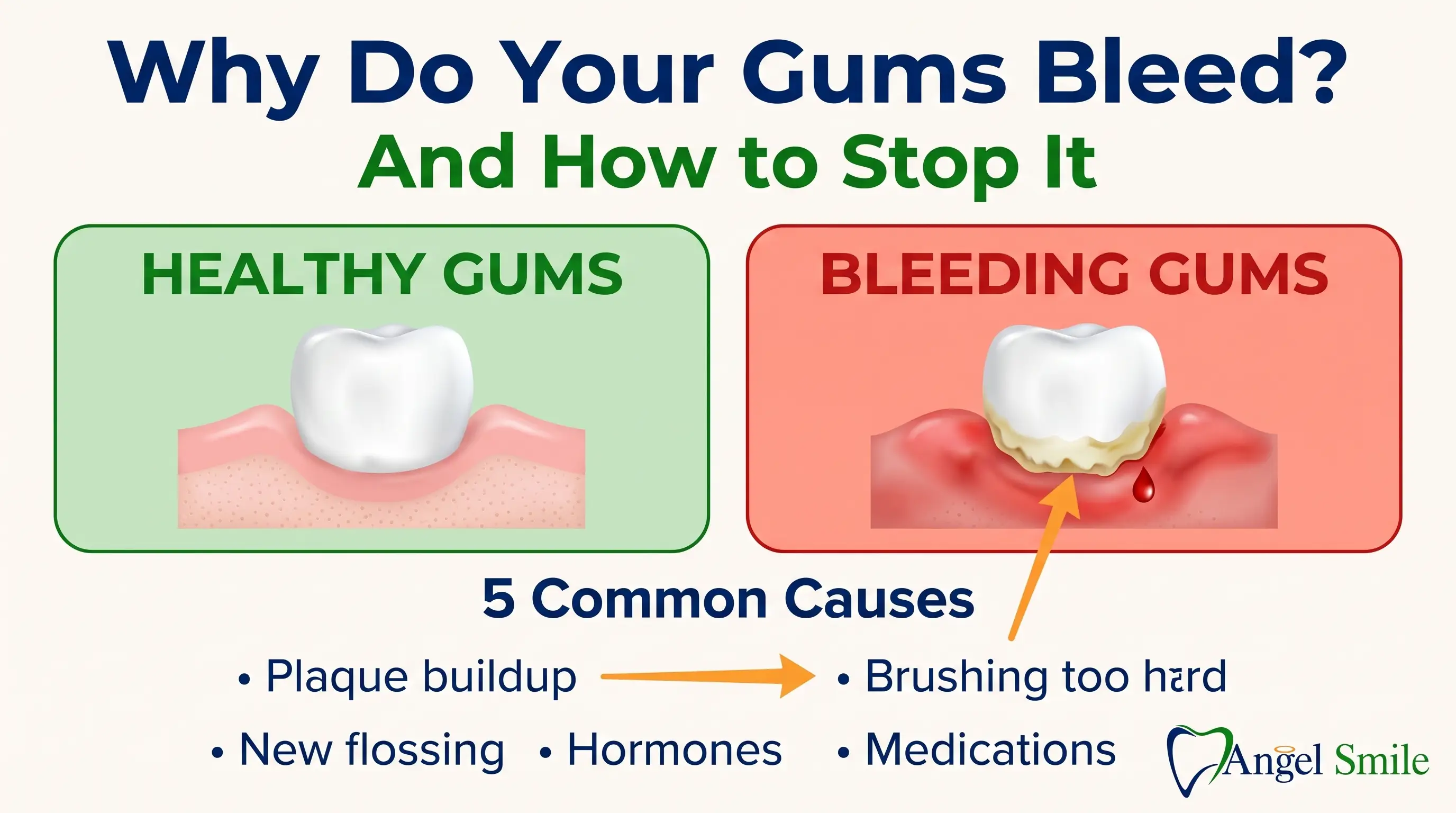
Your gums bleed when you brush because they are inflamed, and the most common reason for that inflammation is plaque sitting along the gumline. If you have wondered "why do my gums bleed when I brush," the honest answer is that healthy gums do not usually bleed, so a little pink in the sink is your mouth waving a small red flag. The good news is that early gum inflammation, called gingivitis, is reversible when you catch it. About 4 in 10 U.S. adults age 30 and older have some level of gum disease, according to the CDC, and for many of them, brushing that draws blood was the first sign.
So bleeding gums are common, but common does not mean normal. This guide walks you through the five real reasons your gums bleed, how to tell a harmless cause from a warning sign, what you can do at home tonight, and when it is time to call a dentist here in Chatsworth. You will leave knowing exactly what your gums are trying to tell you.
Gingivitis is the earliest stage of gum disease, and it shows up as gums that look red or puffy and bleed easily during brushing or flossing. It happens when a sticky film of bacteria, called plaque, builds up where your teeth meet your gums. Your body treats that bacteria as an irritant, sends extra blood to the area, and the tissue becomes tender and quick to bleed.
The American Dental Association puts it plainly: bleeding gums can be a sign of gingivitis, the early stage of periodontal disease. The reassuring part is that gingivitis is reversible and preventable. Remove the plaque consistently, and the inflammation usually calms down within a couple of weeks. Leave it, and it can slowly turn into periodontitis, a deeper infection that damages the bone holding your teeth in place and cannot be undone.
Most bleeding gums trace back to one of these five causes. We have listed them from most common to least so you can find your likely culprit fast.
Pro tip: Do not react to bleeding gums by brushing that spot harder or skipping it entirely. Instead, brush the area gently but thoroughly twice a day and floss it once a day. The bleeding almost always improves within one to two weeks because you are removing the plaque that caused it, not because you scrubbed harder.
No. A small amount of bleeding is common, but it is not a healthy baseline you should accept. Gums that are pink, firm, and well cared for do not bleed when you run a soft brush along them. Think of it the way you would think of your hands: skin that bleeds when you wash it means something is irritated, not that bleeding is just part of washing.
What we see in our practice with Chatsworth families is that people get used to the pink in the sink and assume it is just how their mouth works. Then a year goes by, the gingivitis quietly deepens, and a problem that a routine cleaning could have fixed now needs more involved care. Paying attention early is the whole game. If you want a clear rule for when bleeding crosses from minor to worth a call, our guide on when to see a dentist for sore or bleeding gums lays it out step by step.
Bleeding in a single spot usually points to a local cause rather than whole-mouth gingivitis. Food packed between two teeth, a rough filling edge, a spot you tend to miss when brushing, or early inflammation around one tooth can all make just that area bleed while the rest of your mouth looks fine.
Start by cleaning that spot gently and consistently for a week, and make sure you are flossing it correctly by hugging the side of each tooth in a C shape. A good brushing routine matters here too, and if you use a powered brush, our tips on how to use an electric toothbrush the right way can help you clean the gumline without pressing too hard. If one spot keeps bleeding after two weeks of good care, that is worth having a dentist look at, because a cracked filling or a pocket forming around the tooth will not fix itself.
For garden-variety gingivitis, the fix is not fancy. It is consistency. Here is what actually calms bleeding gums, and most people notice a real difference within two weeks.
Your daily bleeding-gum routine:
What to skip:
Small daily habits add up fast, and our team's daily dental care tips go deeper on building a routine that sticks. Not sure whether a powered or manual brush cleans your gumline better? Our breakdown of electric versus manual toothbrushes for your family can help you choose.
Book a visit if your gums bleed regularly for more than one to two weeks despite good home care, if the bleeding is heavy, or if you also notice swelling, bad breath that will not quit, gum recession, or loose teeth. Those are signs that gingivitis may have advanced, and the CDC reports that gum disease becomes more common with age, affecting roughly 60% of adults 65 and older. Waiting rarely makes it cheaper or easier.
Here is a real example of why timing matters. One patient, a busy dad from Porter Ranch, told us his gums had bled every morning for almost a year before he came in. By then, simple gingivitis had turned into early gum disease, and he needed a deep cleaning that ran about $900 across two visits. Had he come in when the bleeding first started, a standard cleaning of around $150 would have handled it. The bleeding was trying to save him money, and he just needed to listen to it.
Certain groups should not wait at all. If you are pregnant, managing diabetes, or taking a blood thinner, bleeding gums deserve a prompt check because the stakes are higher. The link between diabetes and gum health runs both ways, which we cover in our guide on diabetes and your teeth. A professional cleaning removes the hardened tartar you simply cannot reach at home, and it is often the reset your gums need. Regular visits keep the problem from coming back, and our post on the benefits of regular dental checkups explains why that recall schedule works.
Prevention beats treatment every time, which is the heart of our approach to preventive dentistry for local families. New to the practice and not sure what a first appointment looks like? Our new patient guide walks you through it so there are no surprises.
For most people with early gingivitis, bleeding improves within one to two weeks of brushing twice a day and flossing daily. If you just started a flossing routine, a few days of light bleeding is normal and usually clears within about a week. Bleeding that lasts longer than two weeks of good care should be checked by a dentist.
No, and this is the most common mistake we see. The spot that bleeds is the spot that needs cleaning most, because bleeding means plaque and bacteria are irritating the gum there. Keep brushing it gently with a soft brush and floss it daily. Backing off usually makes the inflammation worse, not better.
Mild bleeding from a new flossing habit or a temporary miss in your routine often settles on its own once you clean consistently. Bleeding caused by tartar buildup will not, because a toothbrush cannot remove hardened tartar. That requires a professional cleaning. If two weeks of solid home care does not stop it, it is time for a dentist.
Sometimes. Persistent bleeding can signal advancing gum disease, and it can also relate to pregnancy, diabetes, blood thinners, or a vitamin deficiency. That is why bleeding that keeps happening, or comes with swelling, loose teeth, or ongoing bad breath, is worth a professional look rather than a guess.
An antigingivitis or antimicrobial mouthwash can help reduce the bacteria that cause bleeding, but it works as a supplement, not a substitute. Brushing and flossing physically remove plaque, and rinse alone does not. Ask your dentist which type fits your situation, since some rinses are better suited to gum inflammation than others.
If you have been asking "why do my gums bleed when I brush," remember the core takeaway: bleeding gums are almost always inflammation from plaque, they are common but not normal, and early gingivitis is reversible when you act. Two weeks of gentle, consistent care fixes most cases, and a professional cleaning handles the rest. Your gums are giving you an early, fixable warning, so this is the easy stage to solve it.
Ready to stop the bleeding for good and protect your smile? Our Chatsworth team is warm, gentle, and here for families across the San Fernando Valley. Book a Free Consultation and let us take a look.


