
Mon - Fri: 8:30am - 5:30pm, closed Wednesday

21902 W. Devonshire St, CA 91311


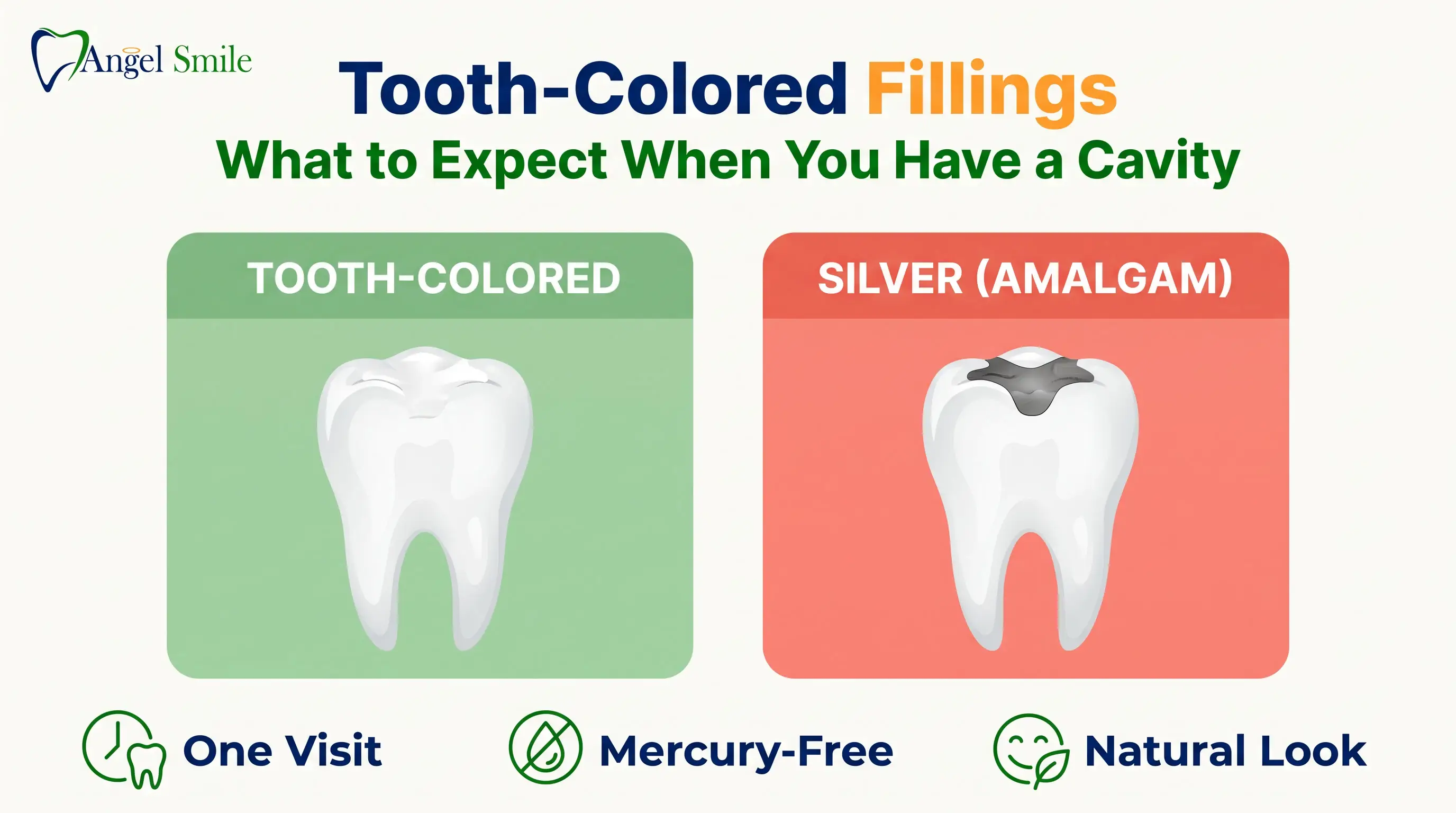
Getting tooth-colored fillings is the most common way we fix a cavity, and here is the short version of what to expect: your dentist numbs the tooth, removes the decay, and rebuilds the spot with a tooth-shaded composite resin that hardens in seconds, usually in a single visit of about 20 to 60 minutes with little to no discomfort. A tooth-colored filling is a mix of resin and fine glass particles that bonds to your tooth and matches its natural color, so no one can tell it is there. Cavities are almost universal by adulthood: nearly 90% of adults ages 20 to 64 have had decay in their teeth, according to the National Institute of Dental and Craniofacial Research, so if you need a filling, you are in very ordinary company.
We put this guide together for families across Chatsworth, Canoga Park, and the wider San Fernando Valley who just heard the words "you have a cavity" and want to know exactly what comes next. You will get the step-by-step of the visit, how long tooth-colored fillings last, what they cost, how they stack up against old silver fillings, and how to care for one afterward.
Tooth-colored fillings, also called composite or white fillings, are made from a putty-like resin blended with tiny glass or ceramic particles. Your dentist shapes the material right into the cleaned-out cavity, then hardens it with a special curing light. Because the composite bonds directly to the tooth, it needs less drilling than an old silver filling did, which means more of your healthy tooth stays put.
The reason they matter goes beyond looks. A tooth-colored filling seals the spot where decay got in, stops the cavity from growing, and restores the tooth so you can chew normally again. That seal is the whole point. Leave a cavity open and the decay keeps spreading toward the nerve. If you are still not sure whether you even have one, our guide to the early signs of a cavity walks through what to feel and look for at home.
These fillings work well for the kinds of everyday repairs most people need:
The visit is quicker and calmer than most people expect. Here is how a routine filling appointment usually goes at our office.
Start to finish, one filling takes about 20 to 60 minutes depending on the size and location. Numbness usually wears off within a couple of hours. Because composite hardens fully under the light, there is no waiting period: you can eat once the numbness fades, though a quick zing of temporary sensitivity to cold for a day or two is normal and settles on its own.
Pro tip: When the numbness wears off, run your tongue over the new filling and bite down gently a few times. If it feels even slightly tall or your teeth do not meet the way they used to, call us for a two-minute adjustment. A filling that sits a hair too high can cause soreness or a cracked tooth down the road, and the fix takes seconds.
Longer than most people think. The largest real-world study of its kind, published in the Journal of Dentistry in 2024 and covering more than 700,000 posterior composite fillings through the National Dental Practice-Based Research Network, found a median survival of over 13 years. Only about 16% of fillings failed over time, and most of those failures happened within the first five years. So a well-placed tooth-colored filling that makes it past its early life often keeps going for well over a decade.
A few things shape how long yours lasts:
No filling is permanent. Every filling eventually needs replacing, and that is normal. The goal is to catch a tired filling at a routine visit and swap it out with a small new one, instead of waiting until it fails and the decay underneath needs a root canal or a crown.
Cost depends on the size of the cavity and how many tooth surfaces it touches, but here are real numbers to anchor on. Nationally, a tooth-colored filling averages about $226 per tooth, with a typical range of roughly $173 to $439 depending on size and where you live, based on cost data compiled by CareCredit from ADA survey figures. Silver amalgam fillings run a bit cheaper, roughly $108 to $256, which is the main reason some people still ask about them.
Most dental insurance plans cover fillings, often at 70% to 80% after your deductible, though some older plans pay the composite rate only up to what a silver filling would have cost and leave you the difference. It is always worth a quick call to confirm your benefits before the visit.
Here is the part worth remembering: a filling is the cheap version of the story. What we have seen with patients across the Valley is that the same small cavity is either a couple hundred dollars now or several thousand later. A Northridge dad came in with mild cold sensitivity on one molar, got a single-surface composite filling for a little over $200, and was done in half an hour. A neighbor with the same starting problem waited about a year, the decay reached the nerve, and he ended up needing a root canal and a crown that ran well past $1,800. Same tooth, same beginning, very different bill. Catching decay early is what keeps it in filling territory.
For most everyday cavities, tooth-colored fillings are the better choice, and they are what we place at our office by default. Silver amalgam is durable and inexpensive, but it has real drawbacks: it shows when you talk or laugh, it requires removing more healthy tooth to hold it in place, and it expands and contracts with hot and cold, which over years can crack the tooth around it.
There is also the mercury question. Silver fillings are about half mercury by weight. The FDA reviewed the science in 2020 and concluded amalgam is fine for most people, but recommended that certain higher-risk groups avoid getting new amalgam fillings when a suitable alternative like composite exists. That group includes pregnant women and women planning to become pregnant, nursing mothers, children under six, and people with certain neurological conditions or kidney problems. For those patients especially, a tooth-colored filling is the clear call.
Quick side-by-side of what actually matters:
Choose tooth-colored (composite) when you want:
Silver (amalgam) still has a niche when:
If you have old silver fillings that still look and function fine, there is usually no need to rush to replace them. We only recommend swapping one out when it cracks, leaks, shows new decay, or bothers you cosmetically.
A new filling does not need anything fancy, just steady habits. The tooth is still a tooth, and it can get a new cavity right next to the filling if plaque is allowed to sit there.
For kids, the same prevention that protects new fillings also prevents the next cavity. Sealants on the molars are one of the strongest tools we have, and our guide to dental sealants for kids explains how they work.
Solid daily care habits at home do most of the work of keeping any filling, and every natural tooth, healthy for years.
The filling itself should not hurt. We numb the tooth first, so most people feel pressure and vibration but no pain during the procedure. Afterward, some mild sensitivity to cold or pressure for a day or two is normal as the tooth settles. If sharp pain lasts more than a few days or the tooth hurts when you bite, call us, because the bite may just need a small adjustment.
The largest U.S. study to date found a median survival of over 13 years for posterior composite fillings, with only about 16% failing over time and most of those in the first five years. Size, location, grinding habits, and daily care all affect the number. Small fillings on front teeth tend to last longest, while large fillings on hard-chewing molars wear out soonest.
For the vast majority of cavities, yes. Modern composite materials are strong enough for everyday chewing and bond directly to the tooth, which actually helps reinforce it. Silver can hold a slight edge in very large fillings on back molars, but for most repairs the difference in durability is small, and composite keeps more of your natural tooth intact.
Yes, and that is one of their advantages. Composite hardens completely under the curing light, so the filling is fully set before you leave. The only reason to wait is the numbness, since it is easy to bite your cheek or tongue while your mouth is still numb. Once feeling returns, usually within a couple of hours, you can eat normally.
Not automatically. If an old silver filling is intact and the tooth is healthy, there is no medical need to replace it just because it is silver. Good reasons to swap one out include a crack or leak, new decay around the edge, sensitivity, or wanting a filling that does not show. We will give you a straight answer about whether yours needs attention or can be left alone.
Tooth-colored fillings are a quick, comfortable, mercury-free way to fix a cavity while keeping more of your natural tooth, and they routinely last well over a decade with basic care. The single most important thing is timing. A cavity caught early is a simple one-visit filling that costs a couple hundred dollars, while the same cavity ignored can turn into a root canal, a crown, or a lost tooth. If you have felt a twinge, spotted a dark spot, or just know it has been too long since your last visit, do not wait for it to hurt. Our team will take a look, tell you honestly what that tooth needs, and fix it while the fix is small. We keep regular checkups friendly, clear, and pressure-free for every member of your family.
Book a Free Consultation with Angel Smile Dental Group and get that tooth taken care of.


