
Mon - Fri: 8:30am - 5:30pm, closed Wednesday

21902 W. Devonshire St, CA 91311


Worried you might need a root canal? Here is the short, calm answer. A root canal is a routine dental treatment that removes infected or damaged tissue from the inside of your tooth, cleans and disinfects the empty space, then seals it so you get to keep your natural tooth. That is really all a root canal is. If you have been quietly asking yourself what is a root canal and whether it will hurt, this guide walks you through the whole thing in plain language, with no scary jargon and no fear tactics.
Here is the reassuring part. Dentists and endodontists perform root canal and other endodontic treatments about 15 million times a year in the United States, according to the American Association of Endodontists, and the goal every single time is the same: stop the infection and save the tooth. Modern treatment feels a lot like getting a regular filling. Most patients tell us afterward that the pain they walked in with was far worse than the treatment itself.
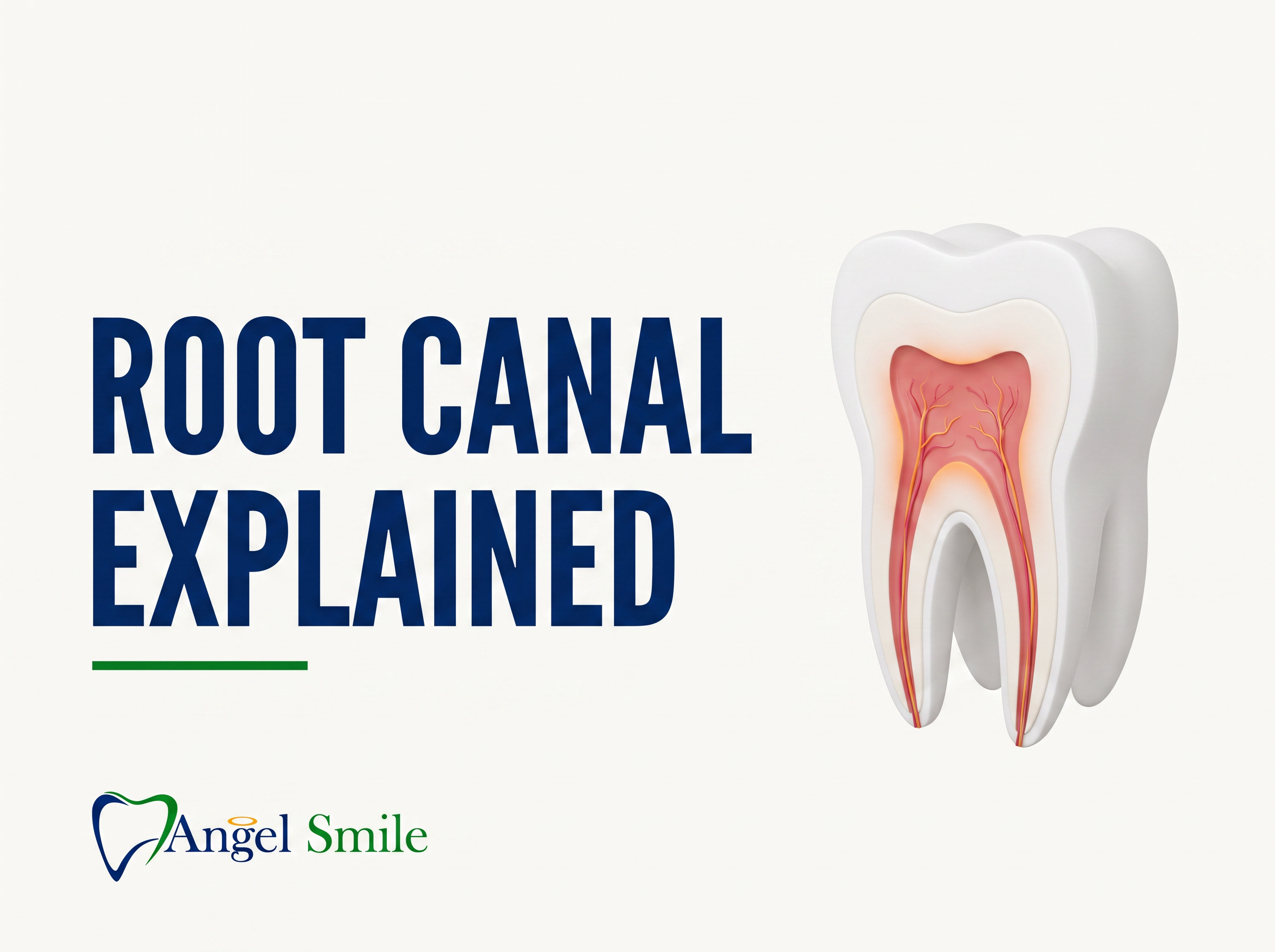
Your tooth is not solid all the way through. Under the hard white enamel and the layer beneath it called dentin sits a soft core called the pulp. That pulp holds the nerves and blood vessels that helped your tooth grow. When deep decay, a crack, or an injury lets bacteria reach the pulp, it gets inflamed or infected. That is when you feel it.
A root canal treats that infected pulp. Your dentist numbs the tooth, makes a small opening in the top, removes the damaged pulp from the inner chambers and the narrow canals in each root, then cleans, shapes, and disinfects those canals. The space gets filled with a rubber-like material called gutta-percha and sealed. Most back teeth then get a crown to protect them, since a treated tooth can become brittle over time. That is why root canals and crowns so often go together, and why you may want to read up on when you need a dental crown after the fact.
The key thing to understand: a root canal saves a tooth that would otherwise have to come out. Once bacteria reach the pulp, the infection does not heal on its own. Your two real choices are to clean out the inside and keep the tooth, or to pull the tooth and replace it. Keeping your own tooth is almost always the better long-term move for your bite, your bone, and your budget.
Not every toothache means a root canal. But a few signals point that way, and ignoring them tends to make things worse and more expensive. Watch for these:
Some infected teeth cause almost no pain at all and only show up on an x-ray during a checkup, which is one more reason those routine visits matter. If you feel sudden severe pain, facial swelling, or a fever, treat it as urgent and call right away. Our guide on what counts as a dental emergency versus what can wait can help you decide how fast to act.
If you cannot get in immediately, these tips for managing dental pain can hold you over until your appointment.
Pro tip: Do not wait for the pain to disappear before you book. When a badly infected tooth suddenly stops hurting, it often means the nerve has died, not that the problem is gone. The infection is still there and can spread to the bone. Sudden relief after days of throbbing is a reason to call, not a reason to relax.
Knowing the plan takes a lot of the fear out of it. Here is how a typical appointment goes, start to finish:
Most root canals wrap up in one or two visits, and each visit usually runs about 60 to 90 minutes depending on the tooth. Front teeth have a single canal and go quickly. Back molars can have three or four canals and take a little longer. Your dentist will tell you which one you are dealing with before you sit back.
This is the question almost everyone asks first, so here is the honest answer. The procedure itself should not hurt. The tooth is numb, and what you feel is pressure and vibration, not pain. The reputation root canals carry comes from the infection that sends people in, not from the treatment that fixes it. The treatment is what makes the pain stop.
Afterward, it is normal for the tooth and gum to feel tender for a few days, especially when you chew. Over-the-counter pain relievers handle that for most people, and the soreness fades on its own. If dental anxiety is what is really holding you back, you are not alone, and there are gentle options. Many of our patients use one of the sedation choices we offer Chatsworth families to stay relaxed through the whole visit.
Our team also has a whole approach to helping nervous patients feel comfortable from the moment they walk in the door.
What we tell people who put it off for months: the anesthetic works, the appointment is manageable, and the relief afterward is real. Fear of the unknown is usually bigger than the visit itself.
For most people, yes, and the numbers back it up. A long-term study published in Clinical Oral Investigations followed root canal treated teeth for up to 37 years and found a tooth survival rate of 97 percent at 10 years and 81 percent at 20 years, with endodontic success holding at 93 percent at 10 years. A well-treated and well-protected tooth can last decades, often the rest of your life.
Two things protect that result. First, get the crown your dentist recommends, because an unprotected molar can crack under normal chewing. Second, keep up with cleanings and checkups so small problems get caught early. The same daily habits that prevent decay in the first place also protect the tooth you just saved, which is why regular dental checkups are worth keeping on the calendar.
Cost is a fair thing to ask about, so let us be straight. Prices vary by tooth and by how complex the case is, but here are the typical ranges you can expect in our area. Treat these as ballpark figures, not a quote:
Here is a real example of why acting early pays off. A patient from Granada Hills came to us with a molar that had been throbbing for a week. He had been quoted more than $4,000 somewhere else to pull the tooth and replace it with an implant. His molar was still saveable, so we did a root canal and crown for about $1,900 total. He kept his own tooth, spent less than half of what a pull-and-replace would have cost, and walked out of the follow-up eating normally. Waiting a few more weeks could have pushed him past the point of saving it.
Dental insurance often covers a good share of root canal treatment because it counts as a necessary procedure, not a cosmetic one. If money is the thing standing between you and relief, ask about it. Our patients pick up a lot of practical ways to save money at our Chatsworth dental office.
A new visit is also easier than most people expect once they see our new patient guide and know what is coming.
Plenty of scary ideas float around about this procedure, and most of them are outdated. Here is what is true and what is not:
Covered above, but it is worth repeating. Pain that vanishes often means a dead nerve and an infection that is still spreading. Get it checked either way.
Most root canals take one or two visits, with each visit running about 60 to 90 minutes. A front tooth with a single canal goes faster, while a back molar with three or four canals takes longer. Your dentist will give you a time estimate once they see the x-ray.
Saving your natural tooth with a root canal is almost always the better choice when the tooth can be saved. Your own tooth keeps your bite stable and your jawbone healthy, and it usually costs less than pulling the tooth and replacing it with a bridge or implant later.
A treated tooth can last decades and often a lifetime. Research shows survival rates around 97 percent at 10 years when the tooth is properly restored, usually with a crown. Good home care and regular checkups protect that result.
Yes, if you had only local anesthetic, which is the norm. You will be numb for a few hours but fully alert. If you choose sedation to stay relaxed, arrange a ride, since sedation can leave you drowsy for the rest of the day.
The infection keeps spreading. It can move into the jawbone, form an abscess, and lead to a tooth that has to be pulled, plus swelling that can become a medical emergency. Treating it early is safer, simpler, and cheaper than waiting.
So, what is a root canal, really? It is the treatment that ends the pain and lets you keep the tooth you already have, done gently and routinely millions of times a year. The scary version lives in old stories, not in the modern chair. If you have a tooth that aches, throbs, or has a bump on the gum nearby, the kindest thing you can do for yourself is get it looked at before it gets worse.
Our team here at Angel Smile Dental Group has helped families across Chatsworth, Canoga Park, Northridge, and Granada Hills save teeth they thought were lost, and we will walk you through every step with zero judgment. Book a Free Consultation and let us take a look while your tooth is still saveable.


