
Mon - Fri: 8:30am - 5:30pm, closed Wednesday

21902 W. Devonshire St, CA 91311


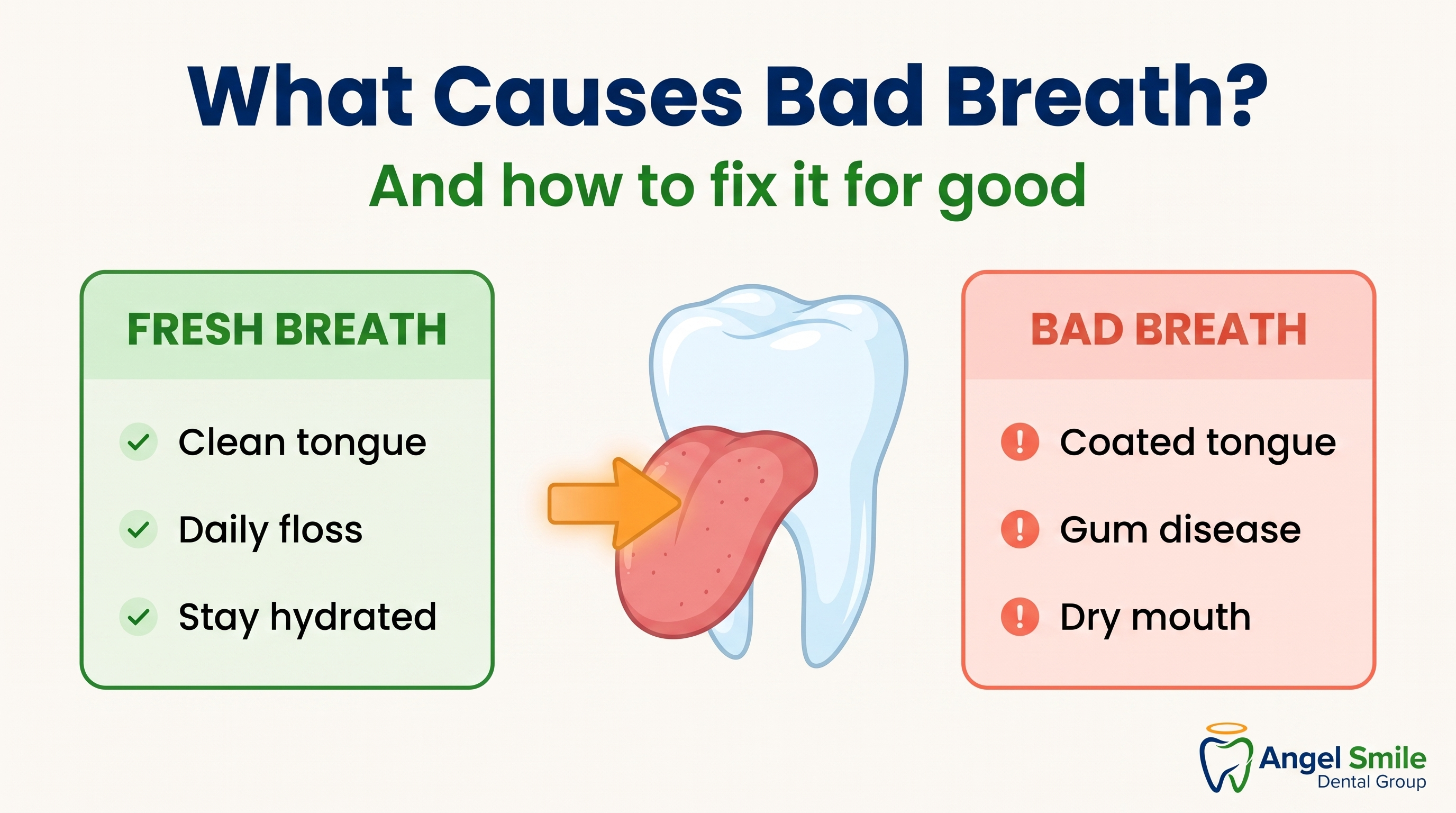
Bad breath that will not quit usually starts in one place: your mouth. What causes bad breath most of the time is bacteria on your tongue and between your teeth breaking down food and releasing smelly sulfur gases. The American Dental Association reports that about 50 percent of adults have dealt with bad breath, also called halitosis, at some point. So if mints and gum stop working by lunchtime, you are not alone, and the fix is usually simpler and more affordable than you think.
The tricky part is that you often cannot smell your own breath, so you are left guessing. This guide walks you through the real reasons breath turns sour, how to tell a harmless case from a warning sign, and exactly what you can fix at home versus what needs a dentist. We help Chatsworth and Canoga Park families sort this out every week, and the answer is rarely what people fear.
Your mouth is home to hundreds of types of bacteria. They live on your tongue, along your gumline, and in the tiny spaces between your teeth. When you eat, bits of food stay behind, and those bacteria feed on the leftovers. The waste they release contains volatile sulfur compounds, and that rotten-egg smell is what other people notice.
Most bad breath is a mouth problem, not a stomach problem. Dental research reviews estimate that roughly 85 to 90 percent of bad breath comes from inside the mouth itself, mainly the tongue, the gums, and unclean teeth. That is good news, because it means the cause is close by and easy to reach with the right habits.
The single biggest hiding spot is the back of your tongue. Its rough surface traps food debris, dead cells, and bacteria in a soft coating you can sometimes see as a white or yellow film. Skip that area when you clean, and you leave most of the odor-makers untouched, no matter how well you brush your teeth.
Bad breath is a symptom, not a single disease, so it helps to match the smell to its source. Here are the reasons we see most often, ranked roughly by how common they are.
1. A coated tongue. Tongue buildup is the top culprit for everyday bad breath. A gentle tongue scraper or a few careful brush strokes on the back of your tongue clears most of it. Do this once in the morning and once at night.
2. Food stuck between teeth. Floss reaches what a brush cannot. When food sits between teeth for hours, it ferments and smells. A quick floss before bed makes a bigger difference than most people expect.
3. Dry mouth. Saliva is your mouth's natural rinse. When it dries up, odor builds fast. That is why morning breath is normal, since saliva slows down while you sleep. Certain medications, mouth breathing, and not drinking enough water all dry you out during the day too.
4. Gum disease. Persistent, hard-to-mask breath often points to inflamed or infected gums. Bacteria collect below the gumline where a toothbrush cannot reach, and the smell that comes with it tends to stick around.
5. Strong foods and drinks. Garlic, onions, and coffee do not just linger in your mouth. Their compounds enter your bloodstream and leave through your lungs, so you breathe them out for hours. That kind of bad breath is temporary and not a health concern.
6. Tobacco. Smoking and vaping dry the mouth, feed odor-causing bacteria, and raise your risk of gum disease. Smoking also dulls your own sense of smell, so smokers often have no idea how strong the effect is.
Two less common sources are worth naming: tonsil stones, which are small, smelly deposits that form in the folds of your tonsils, and sinus drainage that drips down the back of your throat. Both can cause a smell that brushing alone will not touch.
Occasional bad breath after a garlicky meal is nothing to worry about. Breath that stays bad for weeks, even with good brushing, is a different story and deserves a closer look.
The most common reason for stubborn halitosis is gum disease. Plaque that is not cleaned away hardens into tartar, the gums pull away from the teeth, and bacteria settle into deep pockets you simply cannot reach at home. The smell is a signal that an infection is taking hold. Gum disease is widespread, too. The Centers for Disease Control and Prevention reports that about 42 percent of adults age 30 and older have some form of periodontitis, the serious stage of gum disease. If your breath will not clear and your gums bleed or look puffy, those two clues usually travel together. Our guide on when to see a dentist for sore or bleeding gums helps you decide whether to book a visit now or keep an eye on it.
Sometimes the source sits outside the mouth. Ongoing dry mouth, uncontrolled diabetes, acid reflux, sinus infections, and liver or kidney problems can all change how your breath smells. A fruity or sweet odor, for example, can be linked to blood sugar trouble, which is one reason we pay attention to it in patients who have or may be at risk for diabetes. You can read more about that link in our post on diabetes and your gums. A dentist can usually tell whether your breath is a simple hygiene issue or a hint that something else needs attention.
Pro tip: Lick the back of your clean hand, let it dry for ten seconds, then smell it. That spot picks up the odor from the back of your tongue, where most bad breath lives, and gives you an honest read that cupping your hands over your mouth never will.
Most bad breath clears up with a few consistent habits. The goal is simple: remove the bacteria and the food they feed on, and keep your mouth moist. Start with the things you can control at home.
Fixes you can do at home:
Technique matters as much as effort. If you use a powered brush and are not sure you are getting the most from it, our walkthrough on how to use an electric toothbrush the right way covers the angles and timing that clear plaque without hurting your gums.
Building a solid routine is easier than it sounds. Our daily dental care tips give you a simple checklist to follow morning and night.
Signs it is time to see a dentist:
A professional cleaning removes the hardened tartar that home brushing cannot, and it is often the fastest way to fresh breath when gum trouble is the cause. Regular visits also catch small problems before they turn into painful, expensive ones, which is exactly why routine dental checkups pay for themselves.
Not sure whether your symptoms have crossed the line? Our list of signs it is time to visit a dentist near you makes the call clearer.
Here is a real pattern we see. A Northridge mom came to us embarrassed about breath that no mint could fix, sure it meant something was seriously wrong. A quick exam showed early gingivitis and a heavily coated tongue, nothing more. A standard cleaning that ran about $150, plus a nightly tongue-scraping habit, cleared it within two weeks. Had she waited another year, that early gingivitis could have grown into deeper gum disease and a deep cleaning closer to $900. From our experience working with families across the San Fernando Valley, the people who come in at the first stubborn week almost always have the simplest and cheapest path back to fresh breath.
Cost should never be the reason you wait it out. If money is on your mind, these money-saving tips for our Chatsworth patients lay out real ways to keep care affordable.
And if the dentist makes you nervous, that is common and nothing to be ashamed of. You can read how our office helps patients with dental anxiety feel at ease before you ever sit in the chair.
Brushing your teeth cleans only part of your mouth. Most odor-causing bacteria live on the back of your tongue and between your teeth, so if you skip your tongue and floss, the smell stays. Clean your tongue with a scraper or brush, floss once a day, and drink water. If your breath is still bad after two or three weeks of doing all that, gum disease or dry mouth may be the cause, and a dentist should take a look.
No. Plenty of bad breath comes from a coated tongue, dry mouth, or strong foods like garlic and onions, none of which signal disease. Ongoing breath that will not clear with good hygiene, though, is a common sign of gum disease, especially if your gums bleed or look swollen. The pairing of stubborn odor and irritated gums is the one worth getting checked.
Yes, and it is one of the most common causes. Saliva rinses away food and bacteria, so when your mouth dries out from medications, mouth breathing, or not drinking enough water, odor builds quickly. That is why breath is worst in the morning. Sipping water, chewing sugar-free gum, and asking your dentist about dry-mouth rinses all help keep things fresh.
The most reliable home fix is not a remedy at all, it is cleaning the back of your tongue every time you brush, plus daily flossing and steady water intake. Sugar-free gum helps between meals by boosting saliva. Skip alcohol-based mouthwashes that dry your mouth and only mask the smell for a few minutes. If simple habits do not solve it, the problem is below the surface and needs a professional cleaning.
See a dentist if your breath stays bad for more than two or three weeks despite good hygiene, or if it comes with bleeding gums, a constant bad taste, loose teeth, or a very dry mouth. Rarely, a sweet or fruity smell can point to a medical issue like uncontrolled diabetes. A dental exam is the quickest way to find the cause and rule out anything serious.
What causes bad breath, in the end, is almost always something you can reach and fix: a coated tongue, food between your teeth, a dry mouth, or gums that need attention. Clean your tongue, floss daily, drink water, and keep up with regular cleanings, and most cases clear on their own. When the smell will not budge, treat it as a signal rather than a source of shame, because catching gum disease early is far easier and cheaper than treating it later. Our friendly, bilingual team in Chatsworth is happy to find the cause, get you comfortable, and send you home with fresh breath and a plan.


