
Mon - Fri: 8:30am - 5:30pm, closed Wednesday

21902 W. Devonshire St, CA 91311


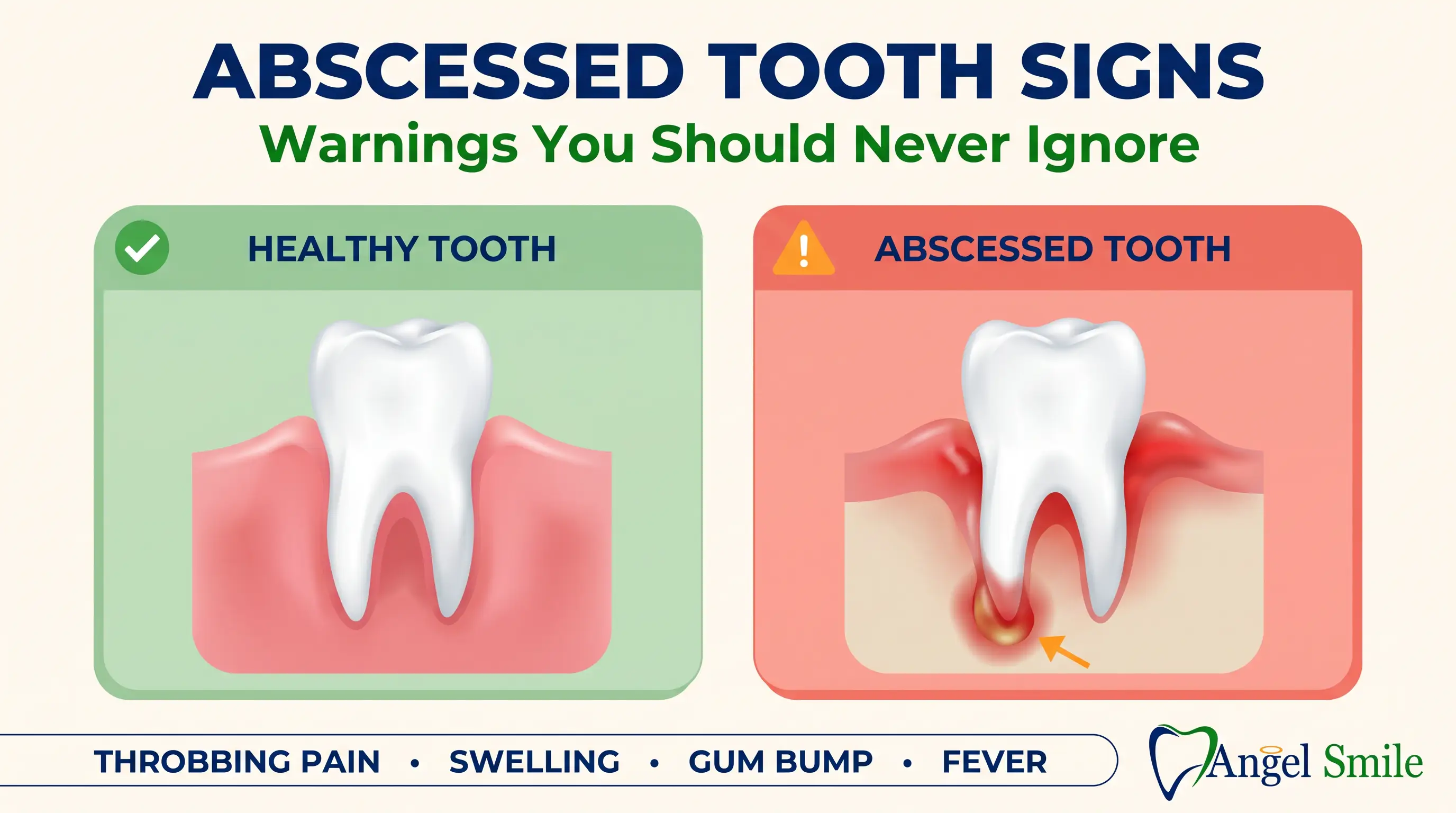
If you have a throbbing tooth, a bad taste that keeps coming back, or a small bump on your gum, the earliest abscessed tooth signs are trying to warn you about a pocket of infection, and you should not wait them out. An abscessed tooth is a bacterial infection that forms a pocket of pus at the tip of the root or in the gum, and it will not clear up on its own. This matters because tooth infections usually start with something small and fixable. Nearly 21% of adults aged 20 to 64 have at least one untreated cavity, according to the Centers for Disease Control and Prevention, and untreated decay is the number one path to an abscess. Catch the signs early and you often save the tooth. Ignore them and a simple problem can turn into an emergency.
We help families across Chatsworth, Canoga Park, Northridge, and Porter Ranch spot these warnings before they spiral, so here is a plain-language guide to what an abscess feels like, what causes it, when it becomes urgent, and how it gets treated.
An abscessed tooth is a pocket of pus caused by a bacterial infection. The bacteria get inside the tooth or under the gum, your body sends white blood cells to fight them, and the dead cells, bacteria, and tissue collect as pus with nowhere to drain. That trapped infection is what causes the pressure and the pain.
There are two common types. A periapical abscess sits at the tip of the root, usually after decay or a crack lets bacteria reach the soft pulp inside the tooth. A periodontal abscess sits in the gum and bone beside the tooth, often tied to gum disease. Both hurt, both can swell, and both need a dentist. The reason an abscess feels so relentless is simple: the pus has no way out, so the pressure builds until it is treated or until it bursts.
Most people notice the abscessed tooth signs days or even weeks before the pain becomes severe. Your mouth gives you a window to act. Here are the seven warnings we see most often, roughly in the order they tend to show up:
One sign worth a special note is the gum bump. When an abscess drains through it, the throbbing can ease for a day or two, and that relief tricks people into waiting. The infection is still there. If you have had a gum boil appear and vanish, or you are also dealing with sore or bleeding gums, treat it as a reason to get seen, not a reason to relax.
Pro tip: A sudden rush of foul, salty fluid and a drop in pain usually means the abscess has ruptured, not healed. Rinse with warm salt water, do not press or squeeze the area, and call your dentist the same day. The drainage buys you comfort, not a cure.
An abscess is almost always the end of a chain that started small. Bacteria need a way into the tooth or gum, and a few common problems hand them the door.
Deep decay is the leading cause. When a cavity is left alone, it eats through the hard enamel and into the soft pulp where the nerve and blood supply live, and the pulp gets infected. That is why the early signs of a cavity are worth acting on fast. A small spot that needs a simple filling today can become an abscess that needs a root canal later.
Cracks and chips are the next big door. A fracture can run deep enough to let bacteria reach the pulp, sometimes with very little visible damage, so the warning signs of a cracked tooth deserve the same quick attention.
Gum disease is another route. When gums pull away from the tooth, deep pockets form where bacteria thrive, which is how a periodontal abscess starts. People managing diabetes and gum health face a higher risk, because higher blood sugar makes infections harder to fight off.
Old or failing dental work and untreated injuries round out the list. A filling that has broken down, or a tooth that took a hard knock years ago, can go quiet and then flare. The thread running through all of it is the same: a problem that felt minor was left too long.
Some abscessed tooth signs are a strong nudge to book an appointment soon. Others are a flashing red light that needs care right away, because the infection may be spreading beyond the tooth. Go to an emergency room or call for urgent help if you have any of these:
These signal that the infection may have moved into the surrounding tissue, the jaw, or the bloodstream, where it can become dangerous. A tooth infection is not something to tough out, and swelling that pushes toward the eye or throat is a true emergency. When you are unsure whether a problem can wait, our guide on whether to wait or go can help you decide, and so can a quick call to the office.
Even without those red flags, an abscess still counts as a dental emergency that should be seen within a day or two. The pus will not drain itself, antibiotics alone do not cure the tooth, and waiting mostly gives the infection more room to grow.
The goal of treatment is always the same: drain the infection and remove its source. How we get there depends on how much tooth is left to save. Roughly 15 million root canals are performed nationally each year, according to the American Association of Endodontists, and that single procedure is what saves most abscessed teeth.
Here is what treatment usually involves, from least to most involved:
From our experience caring for families across the West San Fernando Valley, the cost gap between acting early and waiting is the part people wish they had known. One Northridge dad put off a throbbing lower molar for about three weeks because the pain kept fading whenever a gum bump drained. By the time he came in, the tooth had abscessed and needed a root canal and crown that ran north of $2,500. A filling caught at the first twinge would have been closer to $250. The infection did not just cost more, it cost him the simpler fix.
Prevention comes down to closing the doors that let bacteria in, and most of it is routine. None of it is dramatic, and all of it beats an emergency.
Brush twice a day and clean between your teeth once a day, so decay and gum disease never get a foothold. Keep up with regular cleanings and checkups, which let us catch a small cavity or a failing filling before it reaches the nerve.
Do not ignore early warnings like a dull ache, a sore spot, or new sensitivity, because those are often the first quiet step toward an abscess. If your gums bleed or feel tender, our guide on gum pain and when to see a dentist walks through what that can mean. The pattern is always the same: the earlier a problem is handled, the smaller and cheaper the fix.
No. An abscess is a bacterial infection trapped in a pocket of pus, and it needs a dentist to drain it and remove the source. The pain may ease if the abscess drains through a gum bump, but that is temporary relief, not healing. Left alone, the infection tends to spread.
The symptoms can fade for a while, especially after an abscess drains, which is exactly why people get caught off guard. The underlying infection is still active. If your pain disappeared after a bad taste or a gum bump appeared, see a dentist anyway, because the problem has not resolved.
Yes, it should be seen within a day or two. It becomes an urgent, go-now emergency if you have facial swelling that spreads, a fever with swelling, or trouble breathing or swallowing. Those signs mean the infection may be moving beyond the tooth.
There is no safe window. Some infections stay contained for weeks, while others spread in days, and you cannot tell which one you have from home. Because a spreading tooth infection can reach the jaw, neck, and bloodstream, the safe answer is to get it treated as soon as you notice the signs.
Antibiotics can slow an infection and help when it has started to spread, but they do not fix the tooth. The pus still needs to drain and the source still needs treatment, usually a root canal or an extraction. Think of antibiotics as support, not a cure.
The abscessed tooth signs your mouth sends, from a throbbing ache to a gum bump to spreading swelling, are an early warning you can act on, and acting early is almost always the cheaper, simpler, tooth-saving choice. An abscess will not heal itself, the pain fading is not the same as the infection clearing, and a day or two of waiting can turn a routine fix into an emergency. Trust the signs, and let a dentist handle the rest.
If you or someone in your family has a toothache, swelling, or a bump on the gum, do not wait it out. Book a Free Consultation with our Chatsworth team and we will get you comfortable and get the infection handled, in English or Spanish.


