
Mon - Fri: 8:30am - 5:30pm, closed Wednesday

21902 W. Devonshire St, CA 91311


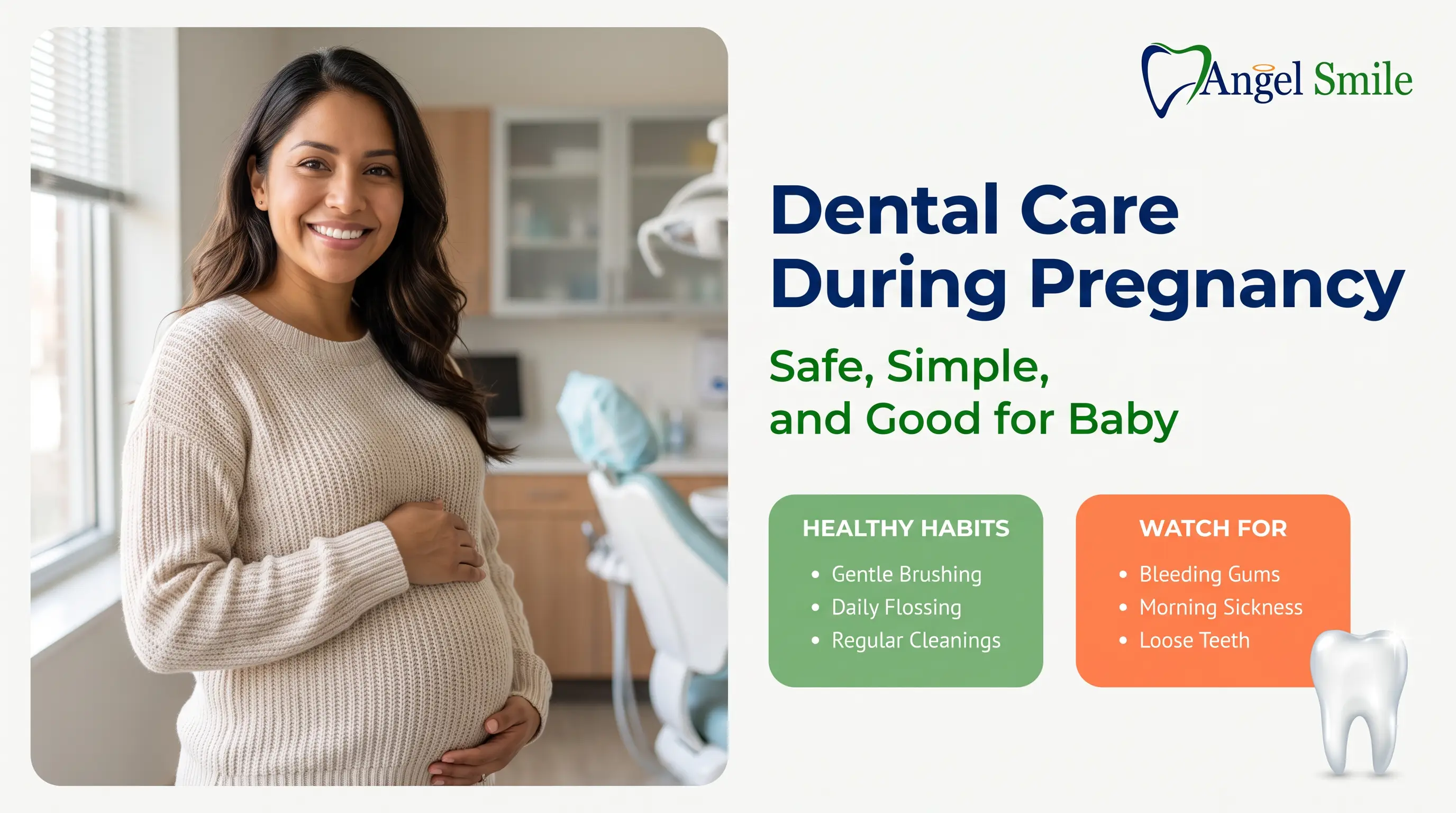
Yes, dental care during pregnancy is safe, and skipping it can hurt more than help. The Centers for Disease Control and Prevention says regular and emergency dental care is safe at any stage of pregnancy, and about 60% to 75% of pregnant women get gingivitis, an early, reversible form of gum disease. So this is not a rare problem. If your gums bleed when you brush or your teeth feel different than they did before, you are not imagining it, and you are far from alone. This guide walks you through what changes, what is normal, what to watch for, and how to protect both your smile and your baby.
Pregnancy is a big deal for your whole body, and your mouth is part of that. Hormones shift, cravings change, and morning sickness can throw your routine off. The good news is that a few simple habits and one or two visits during these nine months make a real difference. Let us break it down.
Dental care during pregnancy is safe, and waiting often makes small problems bigger. The American College of Obstetricians and Gynecologists, in guidance first issued in 2013 and reaffirmed in 2025, states that preventive, diagnostic, and restorative dental treatment is safe throughout pregnancy. That means cleanings, exams, fillings, and even needed emergency work like a root canal can happen while you are expecting.
Cleanings and checkups are safe in every trimester. If you need elective work that can wait, the second trimester is usually the most comfortable window, because the early nausea has often eased and you are not yet carrying the extra weight of the third trimester. Urgent problems, though, should never wait. A painful tooth or a spreading infection is riskier to ignore than to treat. If you are dealing with sudden pain, our guide on managing dental pain until you can see a dentist can help you cope until your appointment.
What about X-rays? Routine dental X-rays use a very low dose of radiation, and your dentist covers you with a lead apron and thyroid collar. Your care team will only take the images you truly need, and they will always want to know you are pregnant, so tell them at your first visit. Honesty here helps them plan the safest care for you.
Pro tip: Tell your dentist you are pregnant and how far along you are before any appointment, even a routine cleaning. Share your due date and any medications or prenatal vitamins you take. That one sentence lets your team time treatment well, skip anything that can wait, and keep you comfortable in the chair.
Pregnancy hormones, mainly higher estrogen and progesterone, make your gums react more strongly to the plaque that builds up along the gumline. The same amount of plaque that caused no trouble before pregnancy can now leave your gums red, puffy, and quick to bleed. That reaction is what dentists call pregnancy gingivitis, and it usually shows up between the second and eighth month.
Here are the most common mouth changes expecting moms notice:
None of this means something is wrong with you. Your body is doing exactly what pregnancy asks of it. It just means your mouth needs a little extra attention right now. Left alone, that early gingivitis can slide into a deeper gum infection, and our guide on when to see a dentist for gum pain shows you the warning signs worth acting on.
Good dental care during pregnancy is mostly about keeping up steady, gentle habits and fitting in a checkup. Your needs shift a little as the months go by, so here is a simple map.
First trimester (weeks 1 to 12):
Second trimester (weeks 13 to 26):
Third trimester (weeks 27 to birth):
Steady brushing and flossing matter more than any fancy product. If you want a refresher on technique, our guide to oral hygiene basics covers the habits that protect your gums best. Drinking plenty of water and chewing sugar-free gum can also ease the dry mouth many moms feel.
Cost is a fair worry, and catching a problem early is almost always cheaper. We saw this with a mom in Canoga Park who came in during her second trimester with gums that bled every time she brushed. It was early pregnancy gingivitis. A standard cleaning and a better home routine, around $150, cleared it up. Had she waited until the bleeding turned into a deeper gum infection, she could have needed scaling and root planing, a deep cleaning that often runs well past $1,000. Small step now, big savings later.
Your mouth and your baby are more connected than you might think. Research links serious, untreated gum disease during pregnancy with a higher chance of preterm birth and low birth weight. The exact cause is still being studied, but the inflammation from infected gums appears to play a role. That is one more reason to treat bleeding gums as a signal, not a nuisance.
Cavities matter too, and not only for you. The CDC reports that one in four women of childbearing age have untreated cavities, and that children of mothers with high levels of untreated decay are more than three times as likely to get cavities themselves. Why? The bacteria that cause tooth decay pass from your mouth to your baby's through everyday closeness, like sharing a spoon or cleaning off a dropped pacifier with your own mouth. A healthier mouth for you means fewer of those bacteria to pass along.
There is a blood-sugar angle as well. Gum disease and gestational diabetes can feed each other, much like the two-way link we cover in our post on diabetes and gum disease. Keeping your gums healthy is one small piece of a healthy pregnancy overall. After your baby arrives, your care naturally shifts to their little smile, and our guide on your child's first dental visit and the value of fluoride treatments for children help you start them off right.
We have seen with expecting moms across Chatsworth and the wider San Fernando Valley that the ones who keep a simple routine and come in for a cleaning tend to sail through with far fewer surprises. You do not need to be perfect. You just need to stay consistent and speak up when something feels off. New to the practice or looking for a dental home for your growing family? Here is what to expect at your first visit.
Yes. Professional cleanings are safe and encouraged in every trimester. They remove the plaque and tartar that drive pregnancy gingivitis, which helps keep bleeding, swollen gums under control. Many moms benefit from an extra cleaning during pregnancy, so ask your dentist if that makes sense for you.
Yes, when needed. Dental X-rays use a very low dose of radiation, and your dentist shields your belly and thyroid with a protective apron and collar. Your team will only take images that are necessary for your care. Always let them know you are pregnant so they can take every precaution.
Bleeding, tender gums are very common in pregnancy because hormones make your gums react more to plaque. It is normal, but it is not something to ignore. Keep brushing gently and flossing daily, and book a cleaning. If the bleeding is heavy or your gums are very painful, see your dentist sooner.
Stomach acid can wear down enamel, so do not brush right after vomiting. Rinse first with water or a mix of a teaspoon of baking soda in a cup of water to neutralize the acid, then wait about half an hour before brushing. Staying hydrated and chewing sugar-free gum help too.
Cleanings and urgent care are fine any time. For elective or non-urgent treatment that can be scheduled, the second trimester is usually the most comfortable window. Never delay treatment for pain or infection, though, since waiting can turn a simple fix into a bigger problem.
Dental care during pregnancy is safe, simple, and one of the kindest things you can do for both you and your baby. Keep brushing and flossing gently, be smart about snacks and morning sickness, and come in for a cleaning. Treat bleeding gums as a signal worth acting on, not a bother to push through. Small, steady habits now protect your smile and give your little one a healthier start.
Angel Smile Dental Group cares for expecting moms and families throughout Chatsworth, Canoga Park, Northridge, Porter Ranch, Granada Hills, and Simi Valley, with a warm, bilingual team that treats you like family. Ready for a gentle checkup during your pregnancy? Book a Free Consultation and let us help you smile through all nine months.


